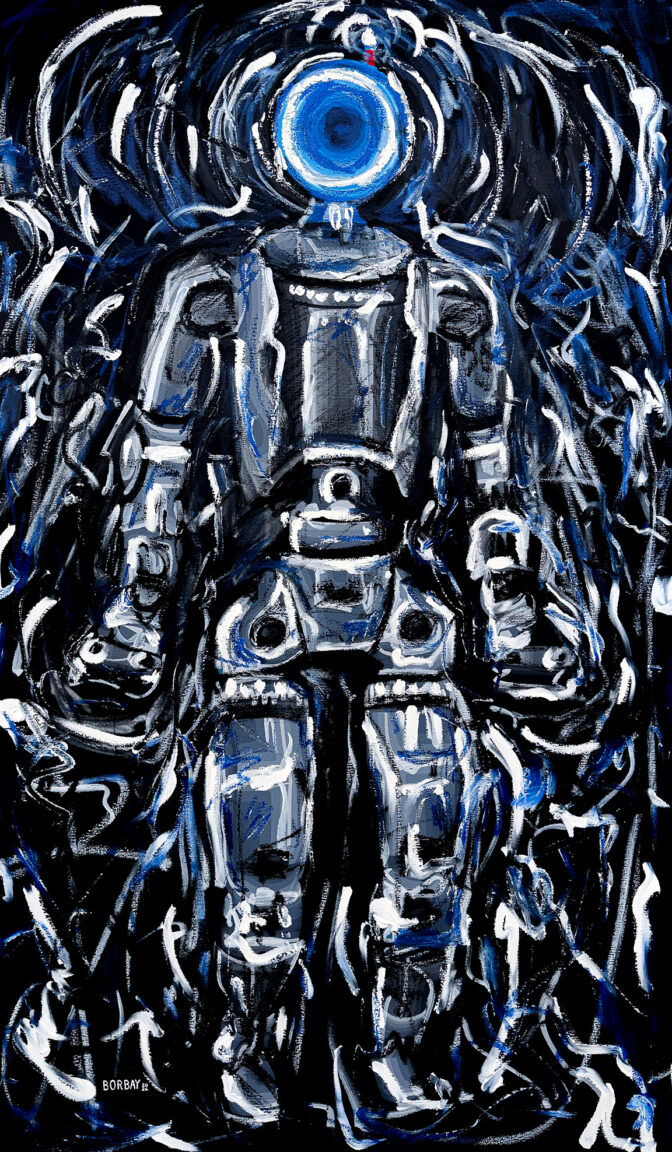
In 2024, I walked through the doors of Boston Dynamics with one question in mind: what happens when a human artist paints one of the world’s most advanced humanoid robots?
My initial vision was clean and direct — a tightly rendered Atlas, perhaps infused with neon… precise technology translated through precise painting.
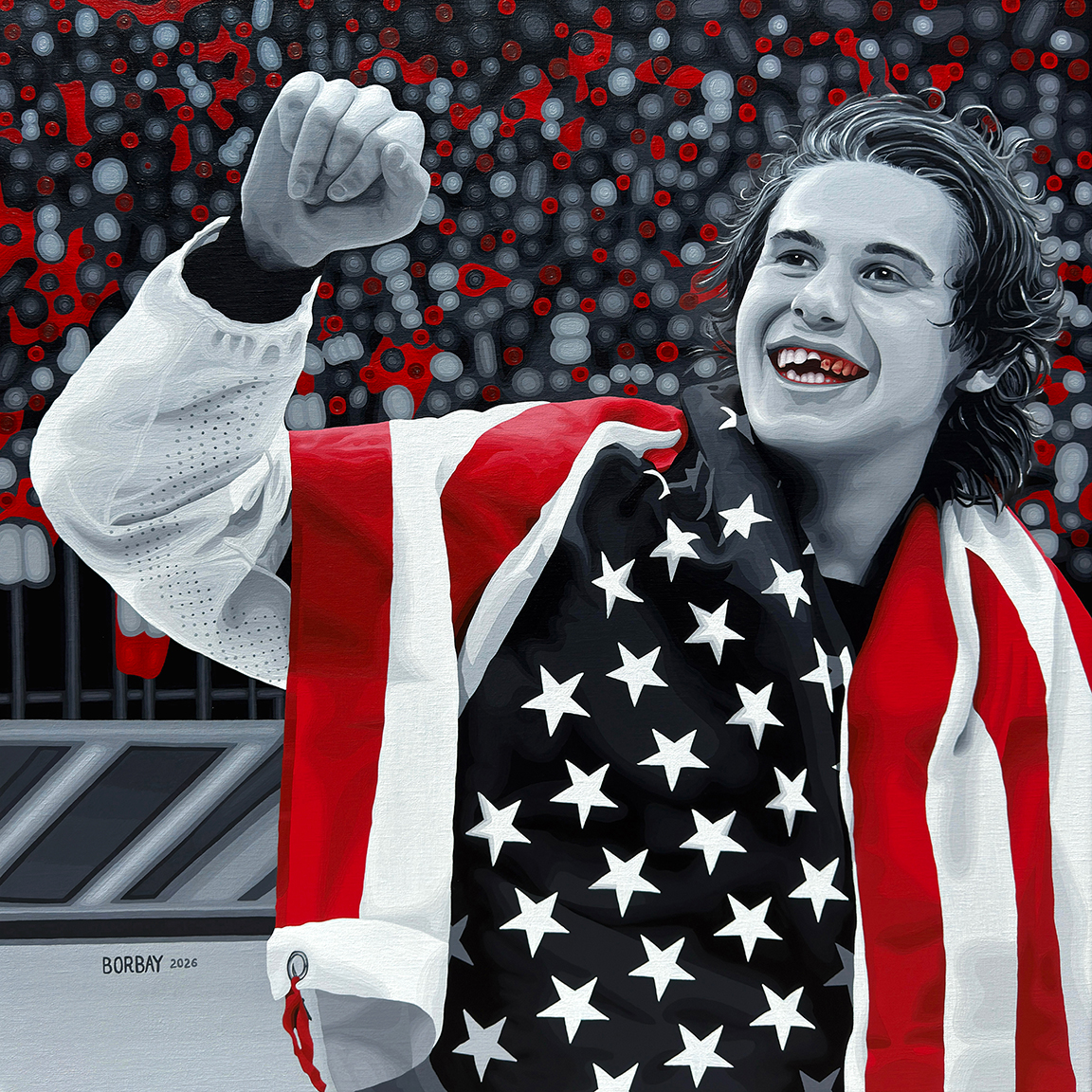
There are goals and there are moments. On February 22, 2026, Jack Hughes scored 1:41 into overtime to defeat Canada, 2–1. This victory delivered the United States its first Olympic hockey gold since Miracle on Ice.
A defensive zone poke check. One flash of speed. An incredible forecheck. A tape-to-tape pass. One perfect release.
As an American hockey player and lifelong fan, to say I was profoundly moved would be an understatement.
I grew up watching and rewatching the Miracle on Ice (“Again!”). Moreover, it was the defining American hockey story, a moment so powerful it transcended sports.
It became part of our national mythology.
Exactly 46 years later, to the day, Hughes created a new icon for American hockey: wrapped in the flag, fist raised, front teeth missing and overcome by what had just happened.
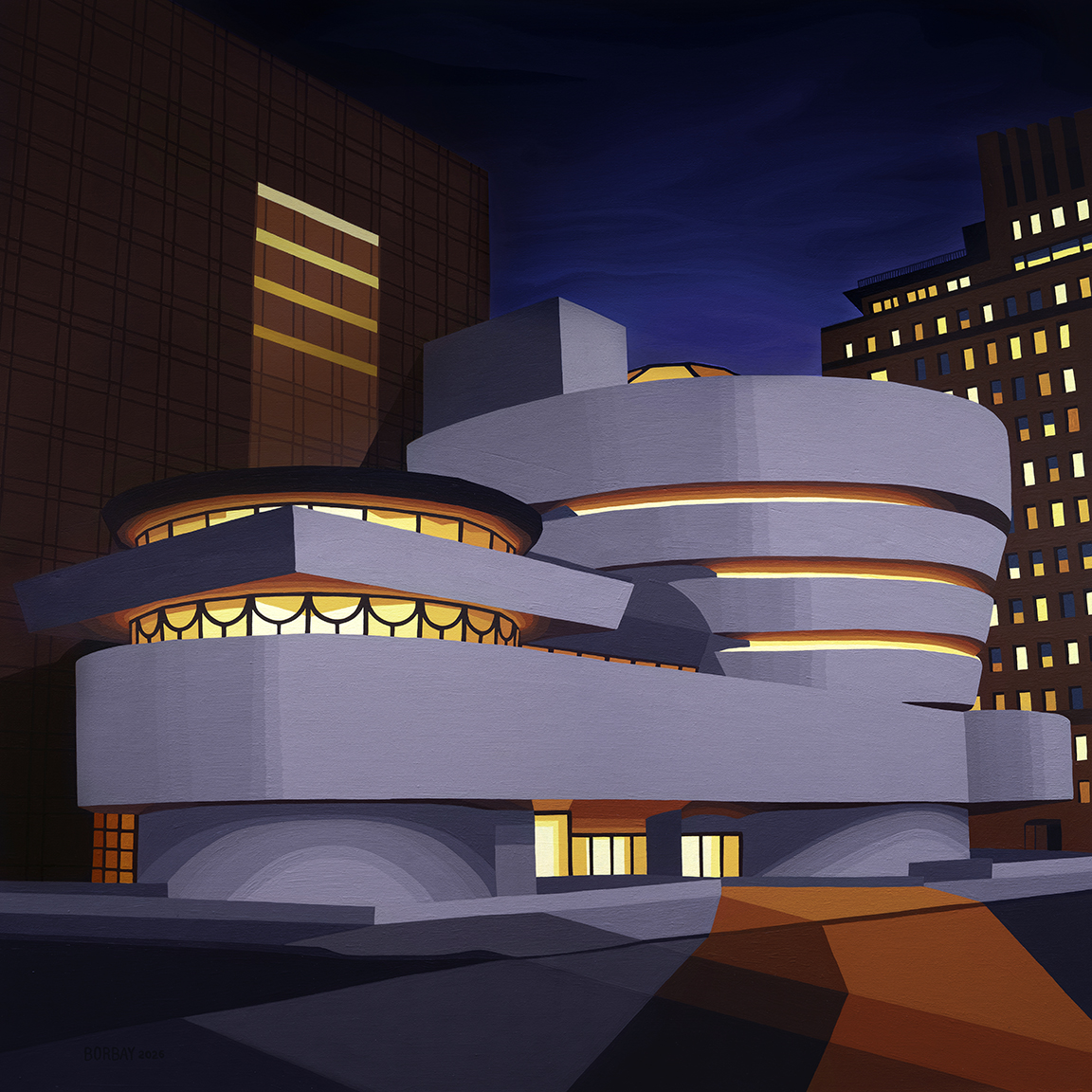
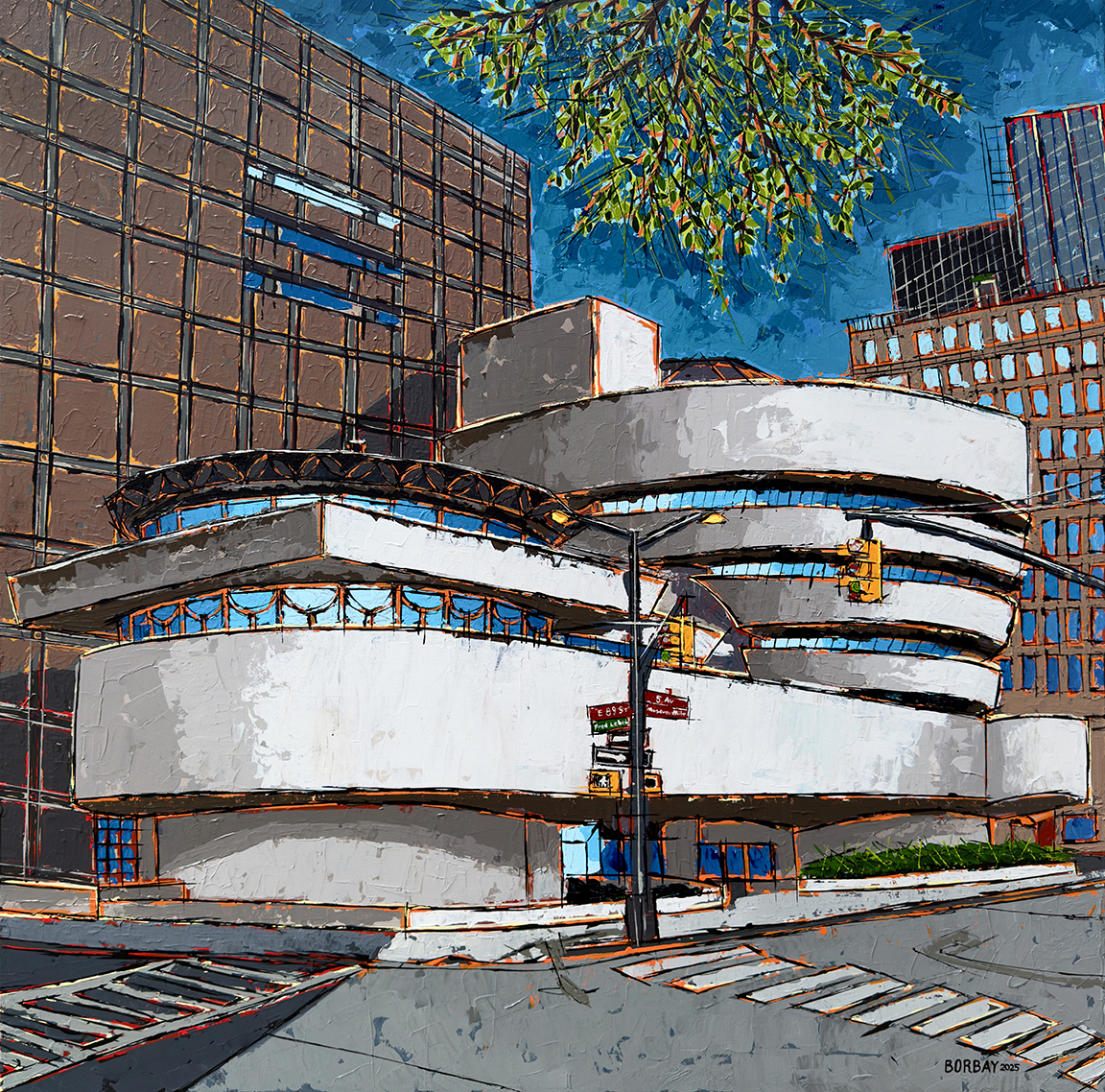
In June 2026, I returned to New York City to create the eighteenth painting in my twenty-year Guggenheim series. What began in 2009 as a single painting evolved into a long-term commitment: twenty paintings over twenty years, all centered on Frank Lloyd Wright’s iconic museum.
Working through intense summer heat and shifting conditions, I found myself increasingly drawn to the reflections of city lights along Fifth Avenue and the museum’s presence after dark. During the trip, a memorable conversation sparked a thoughtful analysis of both Charles Sheeler and Charles Demuth, whose ability to elevate architecture into something both monumental and poetic offered a new perspective. The result is My Guggenheim (2026), a painting that views the museum not simply as a building, but as an enduring American icon.
Masters week has become a quiet ritual in the studio.
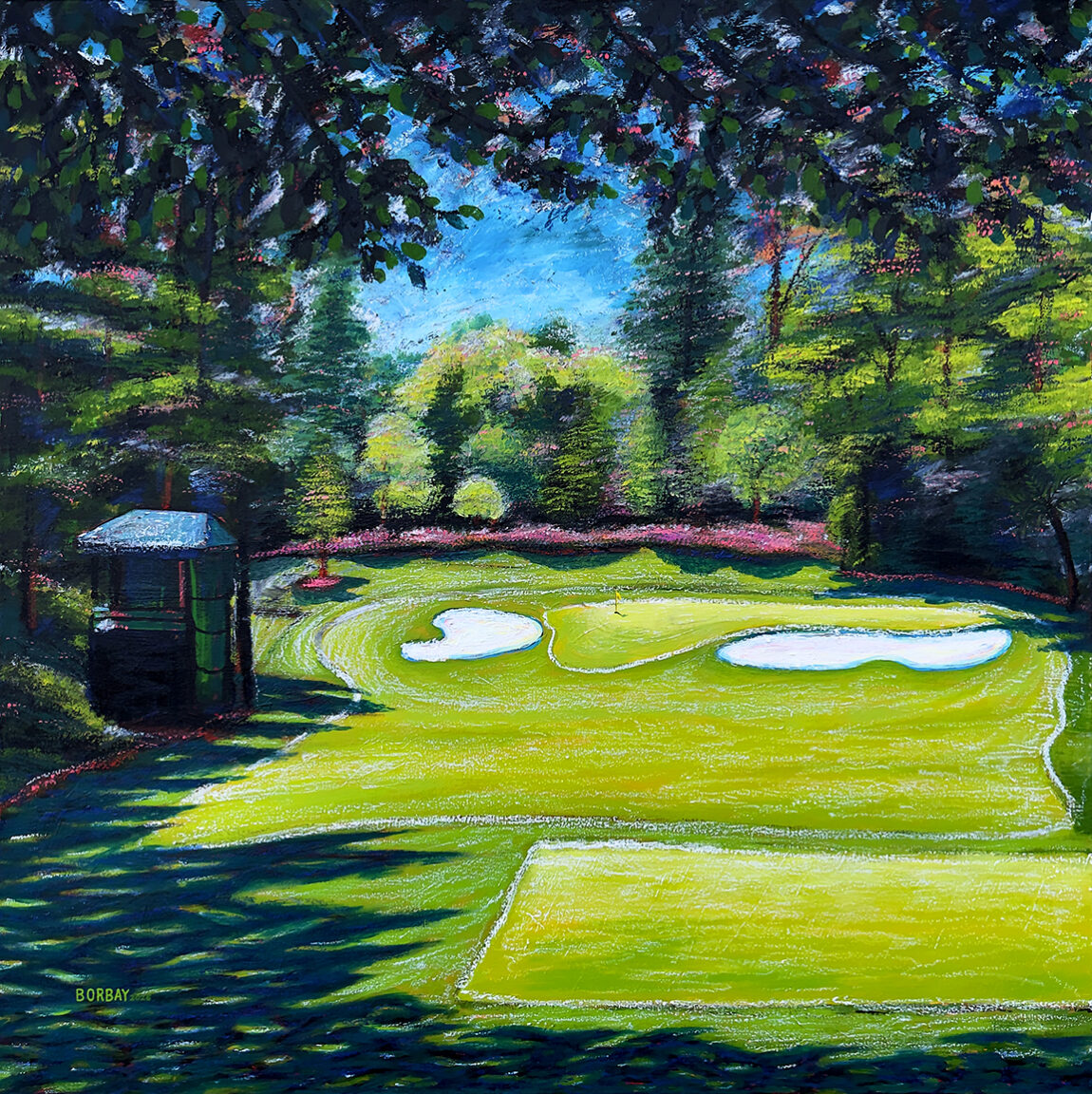
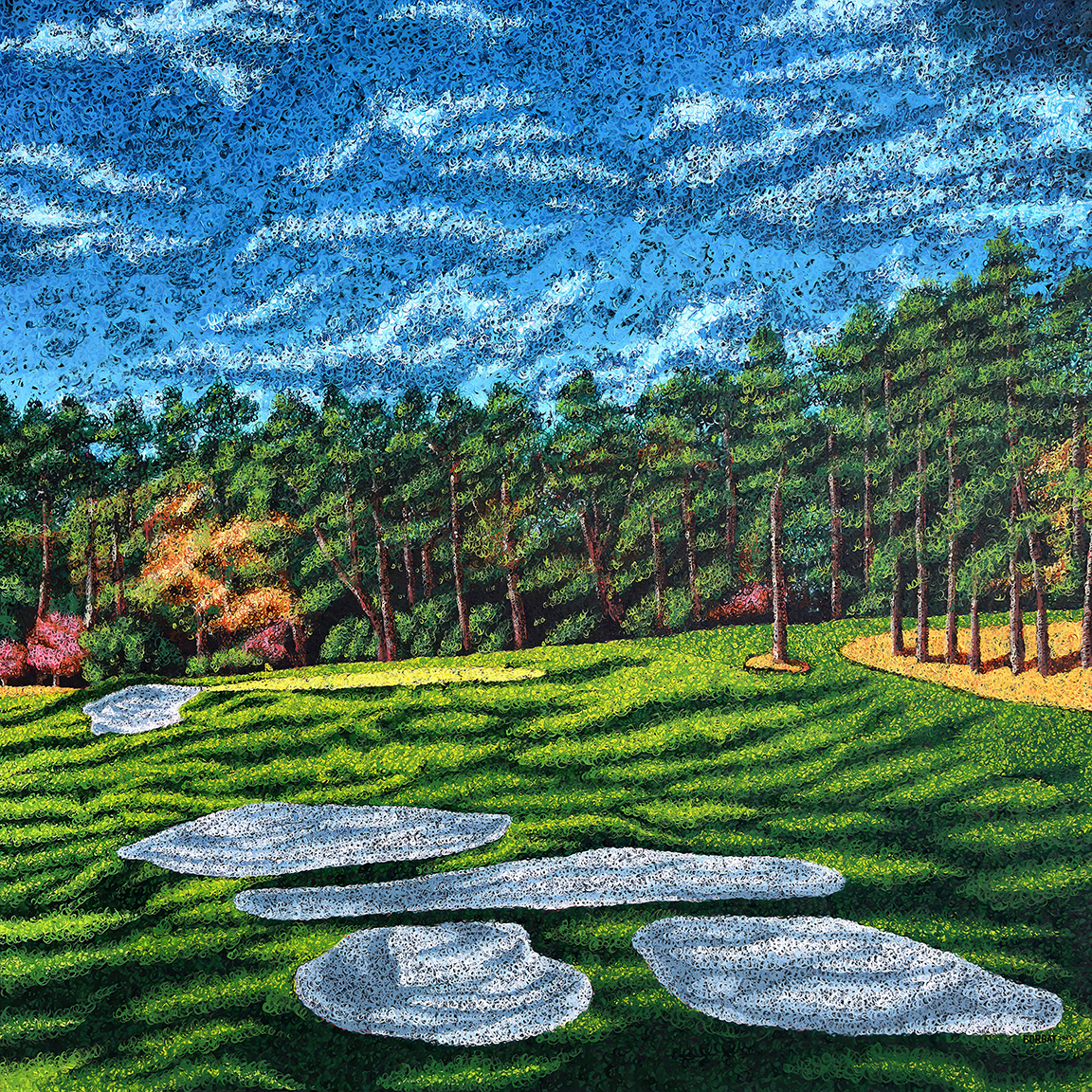
What began in 2020 with Golden Bell has evolved into a long-view study of Augusta National… one hole at a time. Eighteen years, eighteen greens. Each approached not as an image, but as a problem of space, light, and consequence.
For 2026: the fourth hole—“Flowering Crab Apple.”
A par three that reveals itself slowly. From the tee, it feels open. Generous, even. But the closer one looks, the more it narrows. The green sits in tension, held in place by contour, contrast, and restraint.
The aim was to build that tension—to create an amphitheater where the green holds the eye, and everything else recedes into pressure.
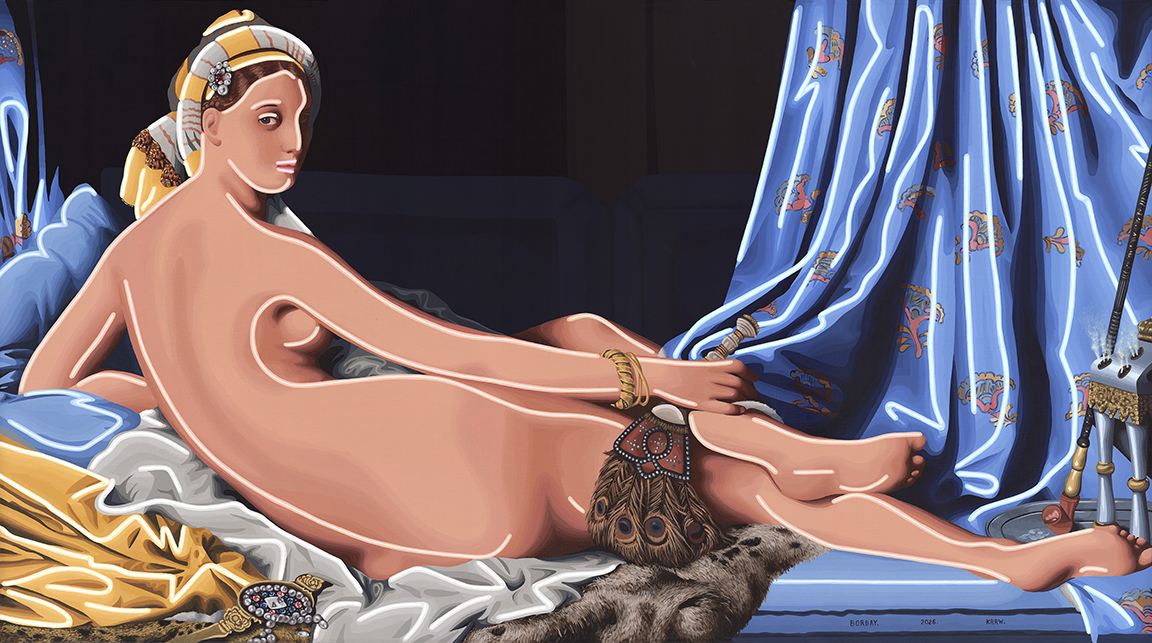
Originally painted in 1814 by Jean-Auguste-Dominique Ingres, Grande Odalisque remains one of the most discussed figures in Western art. Its famously elongated anatomy—both improbable and elegant—has fascinated viewers for more than two centuries.
That tension between distortion and beauty made the painting irresistible for reinterpretation through neon.
This work continues Borbay’s Re-Mastered Series, translating historic masterworks into contemporary visual language.
The project began during a conversation with a collector exploring a commission. They were initially drawn to Neon Girl with a Pearl Earring, which had already been placed, and suggested looking deeper into the series. I created a shared Dropbox folder and invited them to add works that resonated. When the file titled “Top_Fav_Grande_Odalisque_Ingres” appeared, the direction was clear.
Many Borbay paintings begin this way—through conversations with collectors that evolve into collaborative studio explorations.
Borbay Studios & Gallery is delighted to introduce the Borbay Equity Pricing Model. The BEPM allows collectors to acquire, and own, an original Borbay painting for 10, 20, or 30% below market rate.
In exchange, Borbay will retain like equity in the painting(s) acquired. The basic terms of this engagement are as follows:
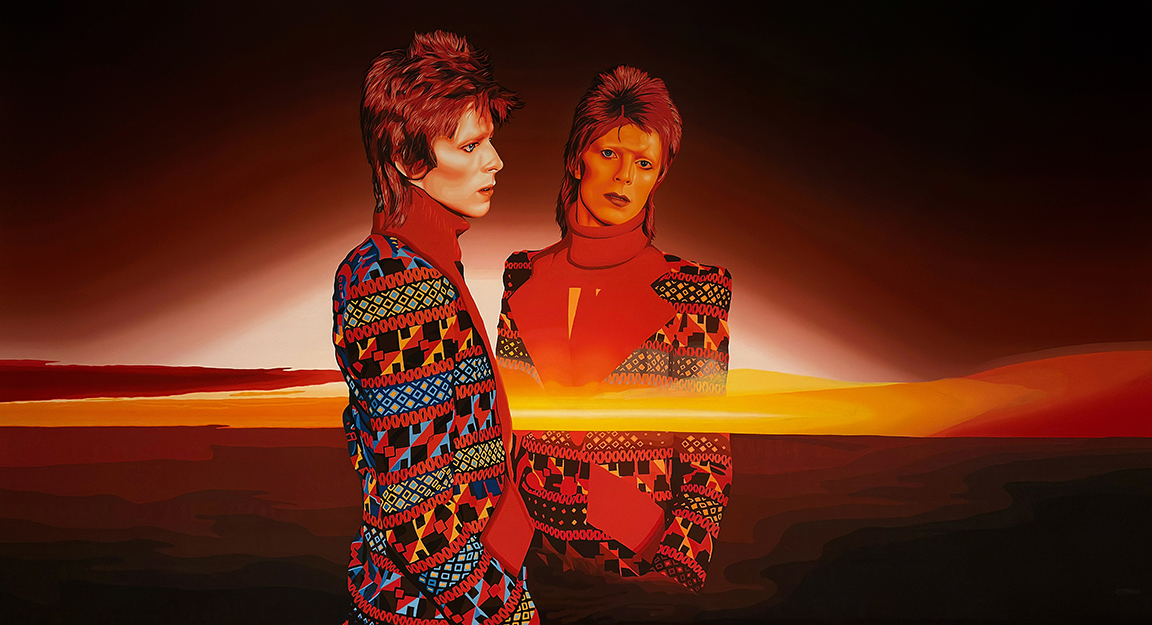
Introducing the largest canvas painting of my career, “Turned Myself to Face Me” — a 52.5″X94.5″, Acrylic on Belgian Linen partial collage-painting portrait of David Bowie.
This work began on January 10, 2025, and was signed on November 2, 2025. Bowie tested everything I knew about painting, and became the catalyst for significant creative and professional growth.
For Year Seventeen in my 20-Year-Guggenheim series, I returned to 89th Street and 5th Avenue to paint on-location. Once again, the vibes, energy, conversations and weather dictated the canvas… my reason for creating on-site.
There are eighteen greens at Augusta National — I’m painting each one. Beginning in 2020 with “Golden Bell“, I’m delighted to share the sixth works in my “Masters Series” — “Flowering Peach”, hole #3 at The Masters.
I celebrated Rory’s magical victory, with a painting showcasing a labyrinth of thousands of individual hand-painted swirls, following two pointillism-focused works.