
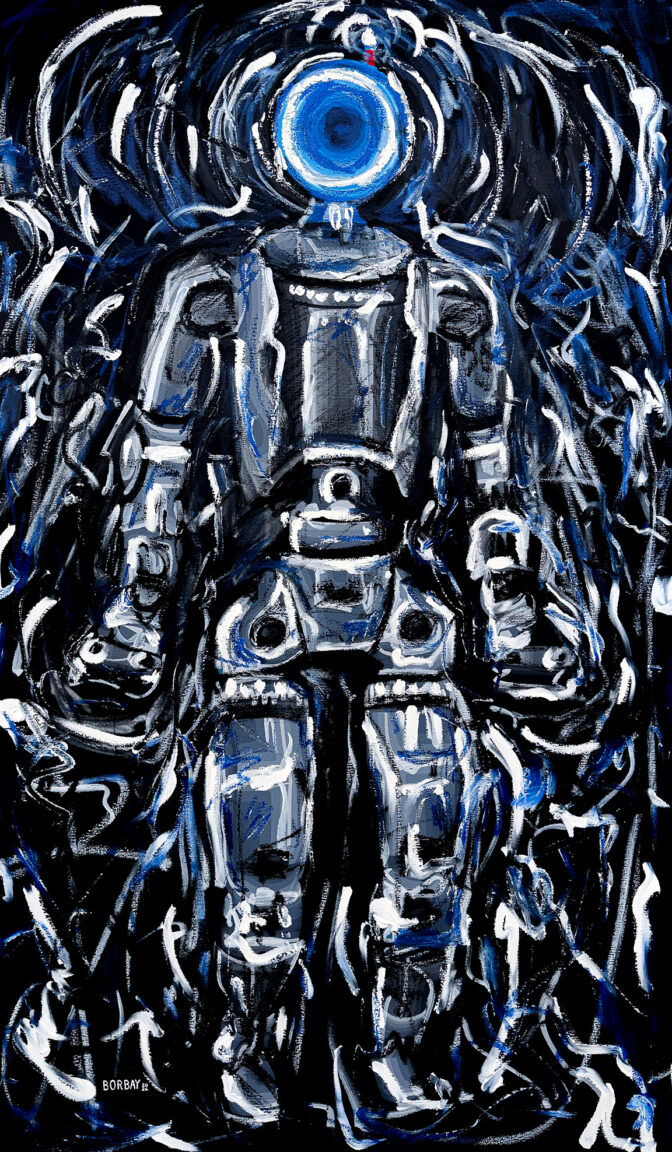
In 2024, I walked through the doors of Boston Dynamics with one question in mind: what happens when a human artist paints one of the world’s most advanced humanoid robots?
My initial vision was clean and direct — a tightly rendered Atlas, perhaps infused with neon… precise technology translated through precise painting.
The painting had other plans.
Inside Boston Dynamics
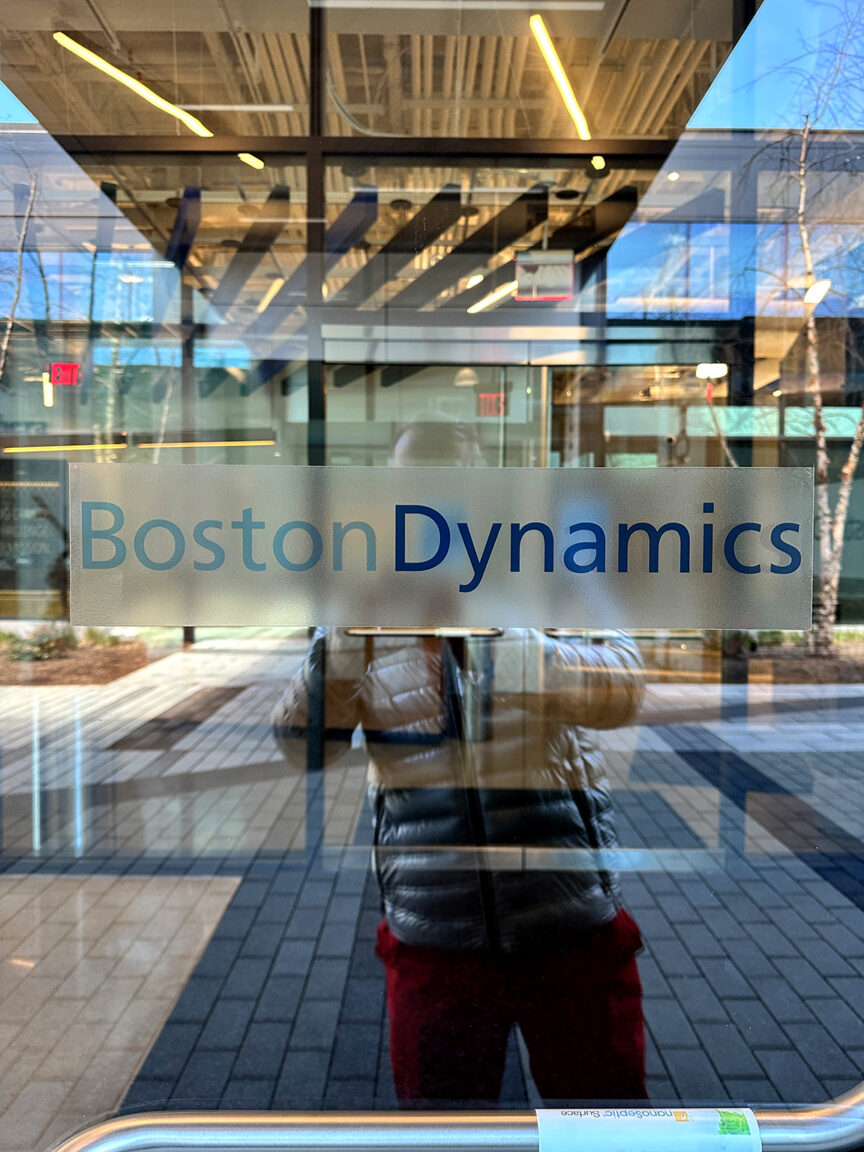
Here I am, arriving at Boston Dynamics headquarters for a private tour.
By extraordinary coincidence, I arrived on the day Atlas 2 was released. As you might imagine, it was not the ideal moment to wander through the building with a camera. Photography ended at the security boundary, but the tour continued into the heart of the operation.
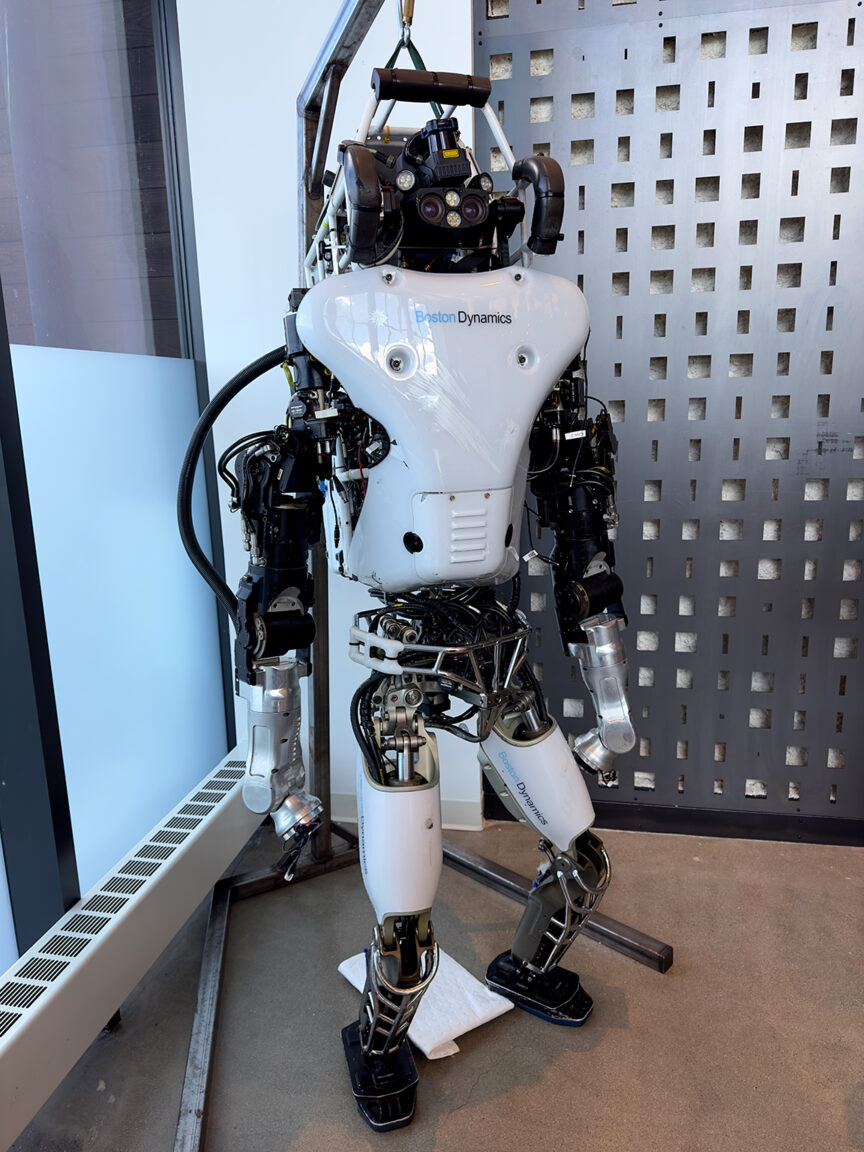
It began with an earlier chapter in the evolution of Boston Dynamics’ humanoid robots.
Standing beside these machines is dramatically different from watching them on a screen. Online, they appear impossibly fluid — running, jumping, balancing and recovering with an ease that begins to feel natural. Up close, you see the engineering: joints, wiring, hydraulics, sensors, cameras and years of relentless experimentation.
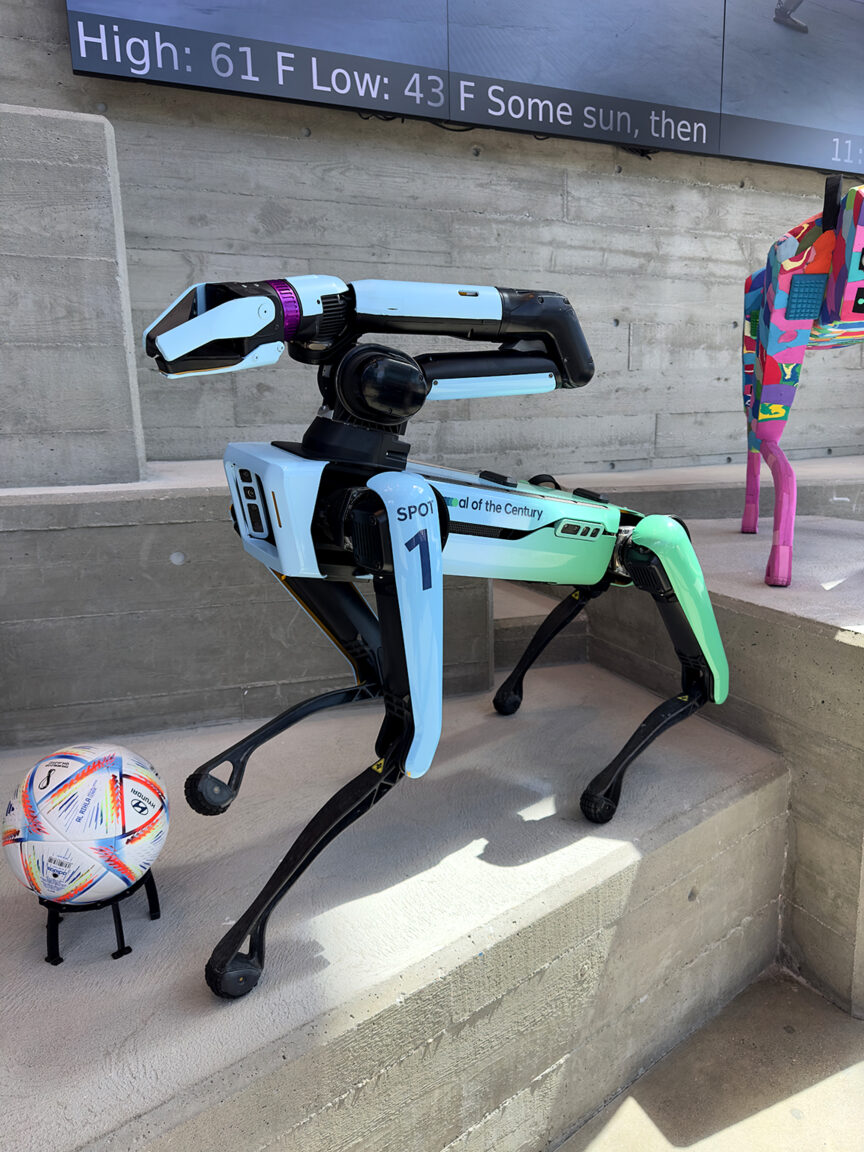
There is something strangely charismatic about Spot, in particular, when he is dressed for the occasion. It has no face, yet its movement immediately suggests awareness and personality. We are remarkably willing to project life onto anything capable of navigating the world with intention. Walking alongside the newest generation of Spot is a wild experience. They behave like actual dogs, walking in stride with you, obedient and friendly.
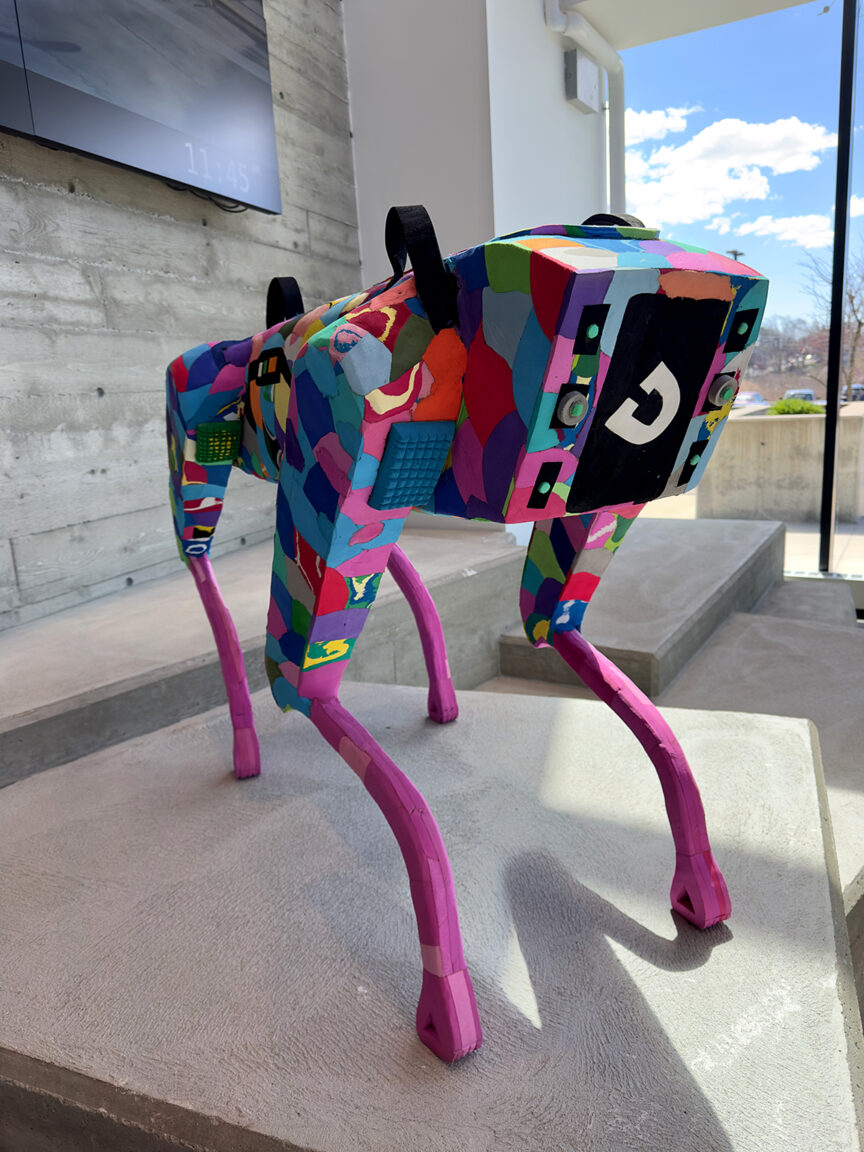
This colorful interpretation of Spot caught my attention. Robotics and art are not opposing forces. Each begins with an idea, proceeds through countless revisions and eventually becomes something capable of changing how we experience the world.
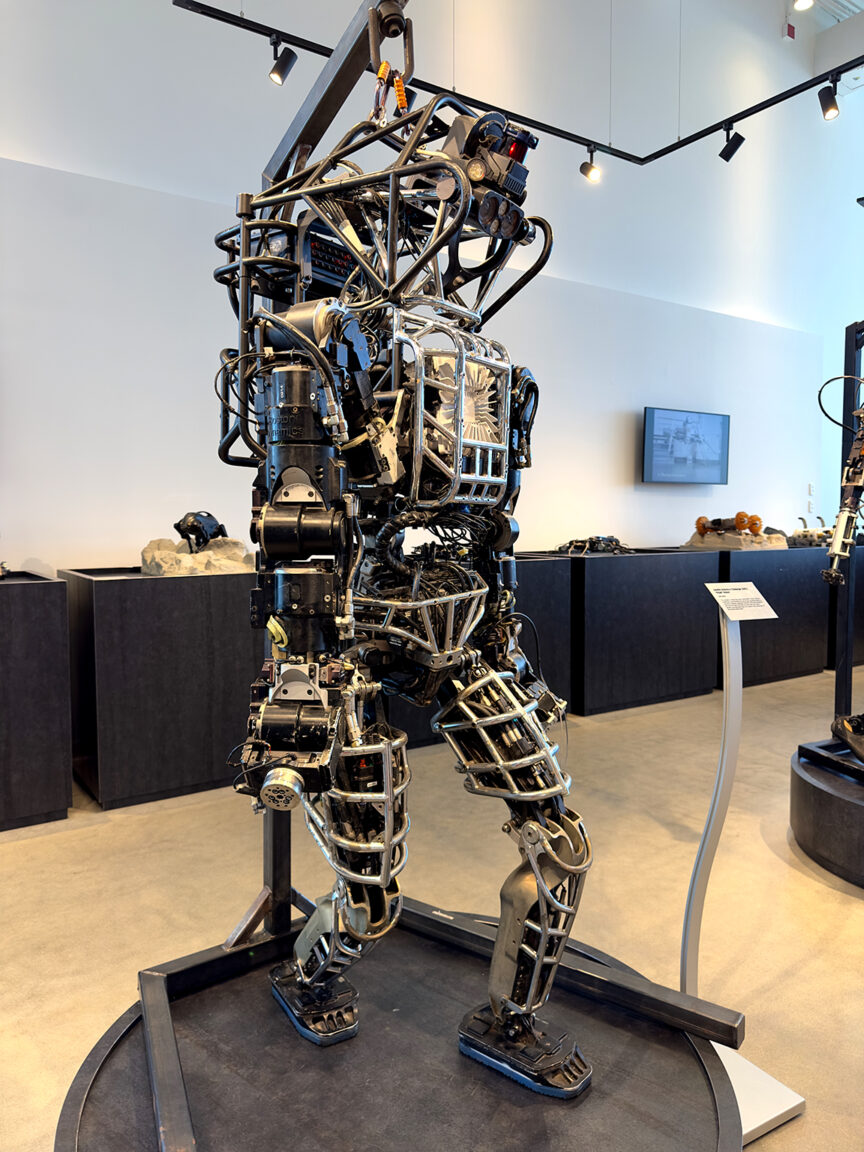
To watch the evolution of these robots is to see generations of thought made physical. Each machine contains the successes and failures of everything that came before it… a process not entirely dissimilar from building a body of paintings.
Boston Dynamics: a place built around the audacious pursuit of making machines move through the world.
I left the facility inspired, carrying a head full of images I wasn’t permitted to photograph. Rather than simply reproducing what I had seen, I was left to consider what Atlas represented.
Then it was time to paint.
Constructing Atlas
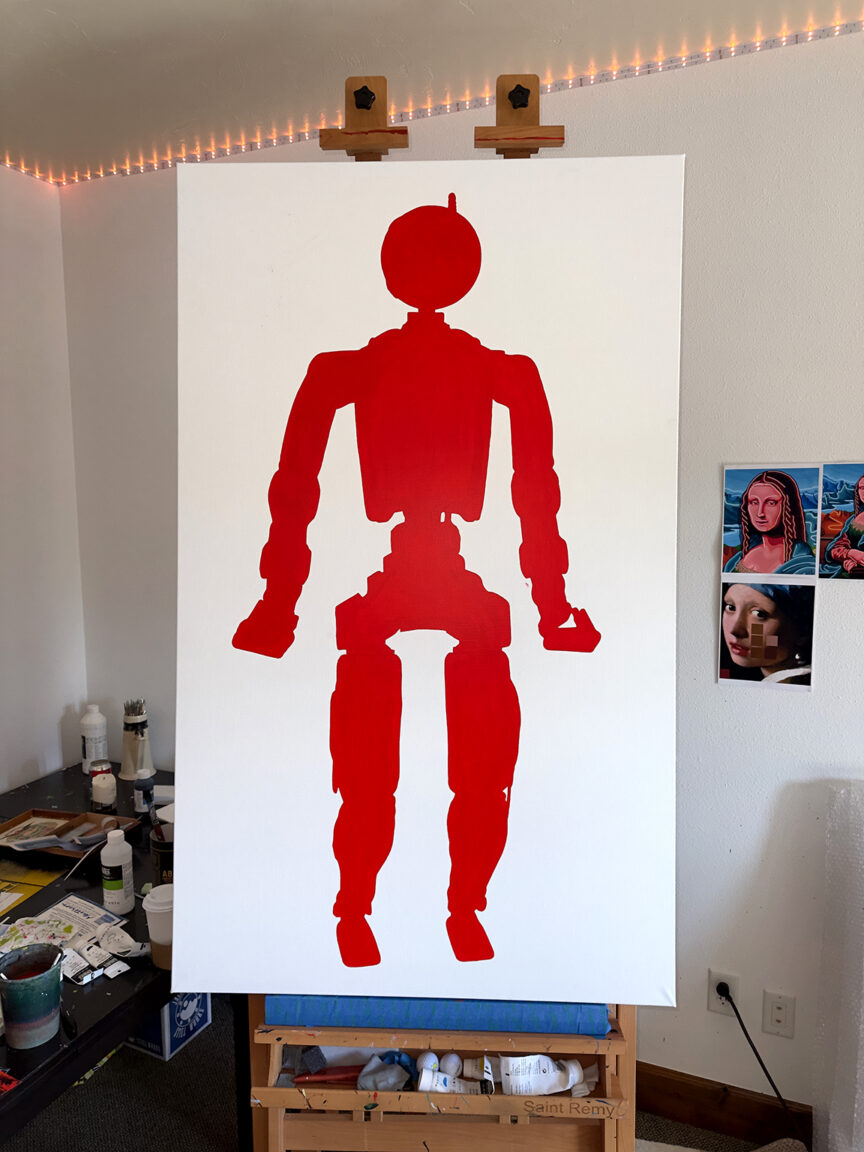
The first move: reducing one of the world’s most sophisticated robots to a single red silhouette.
The painting began with Atlas isolated against white… a monumental, simplified form rendered in red. Before details, mechanics or personality, there was only shape.
This established the figure at full scale. At 36″ × 60″, Atlas occupies the canvas with nearly human proportions. You do not look down upon the robot… you meet it.
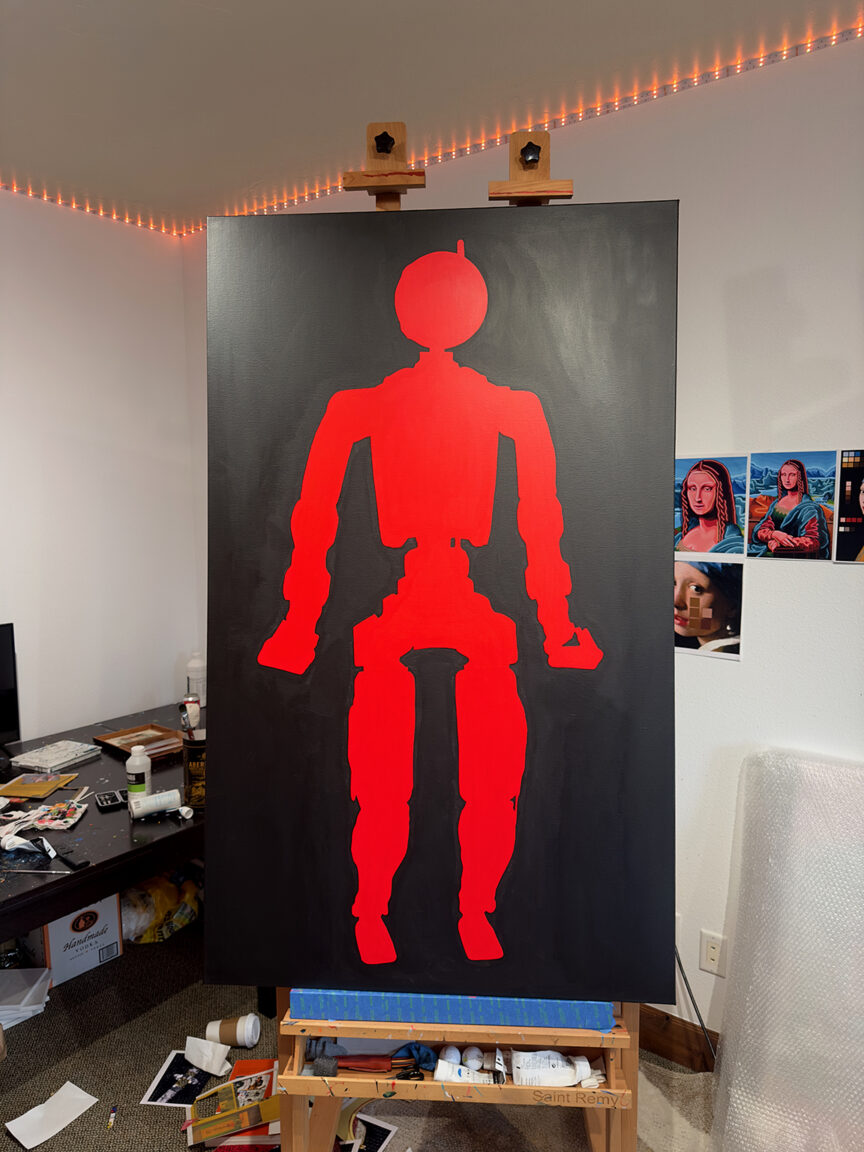
The background shifted to black, and the red silhouette began to glow.
Once the surrounding field turned black, the composition immediately approached my original idea. Atlas felt like neon… a red apparition emerging from darkness.
It was clean. Graphic. Technological.
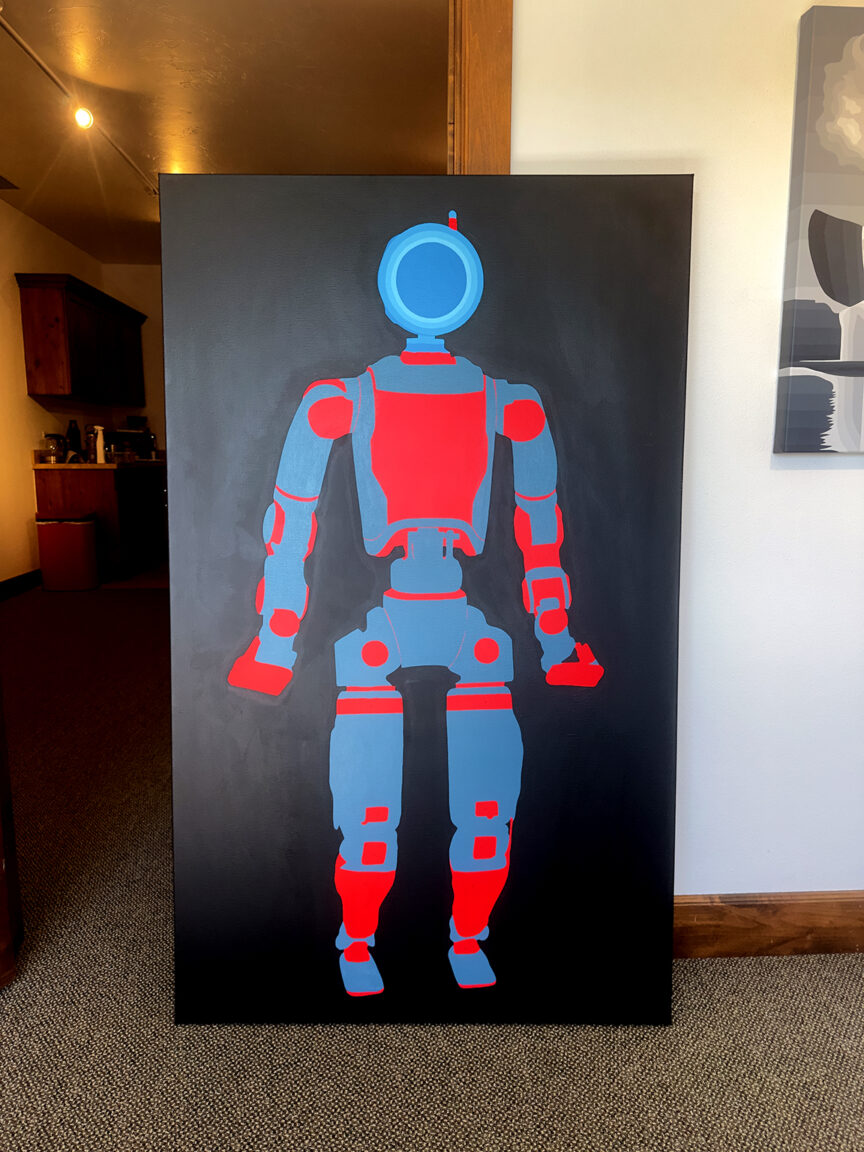
Next, it was about building the robot through broad fields of red, blue and grey.
From there, I began mapping the structure of the machine. The flat red figure was divided into panels, joints and mechanical systems. Blue entered the circular head, grey established the body and the original under-painting continued to pulse through the surface.
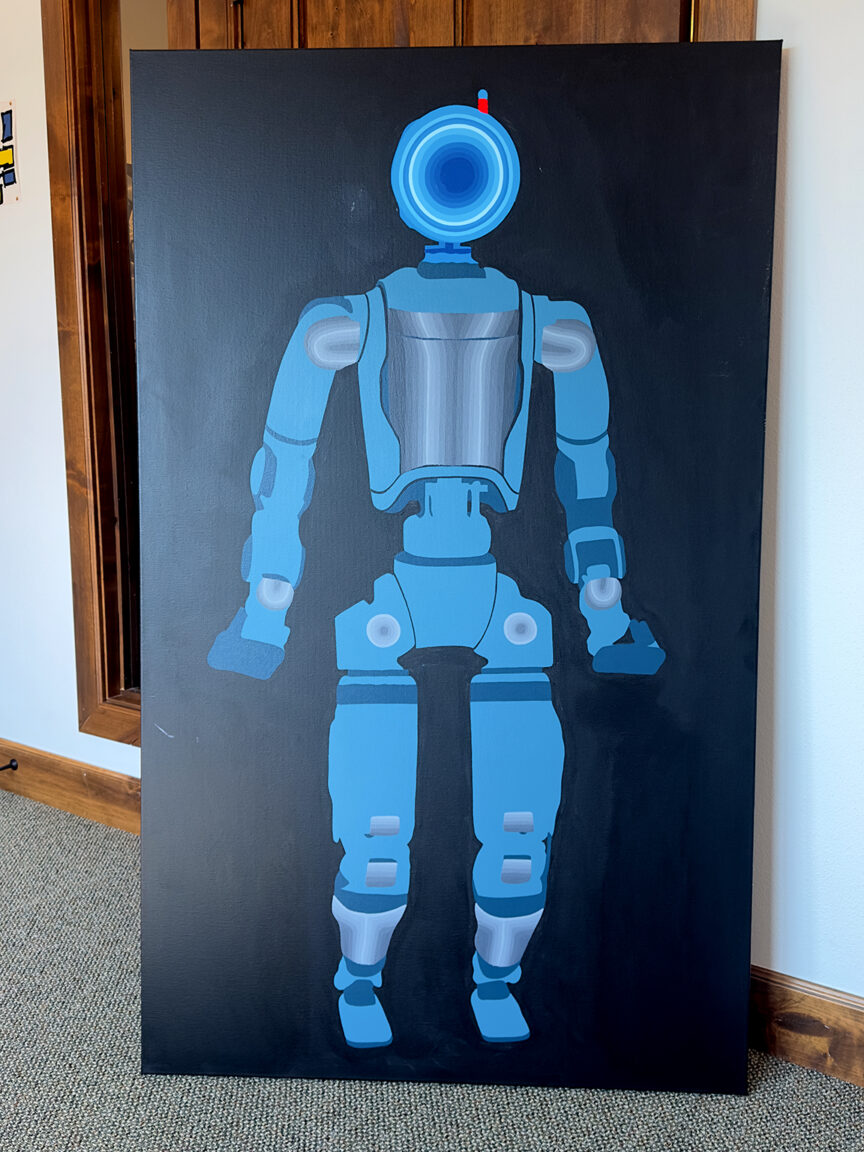
Now, Atlas began rounding into form, one mechanical system at a time.
At this stage, the painting was moving toward a clean, stylized portrait. The concentric circles of the head became a focal point; part camera, part target, and part radiant technological halo.
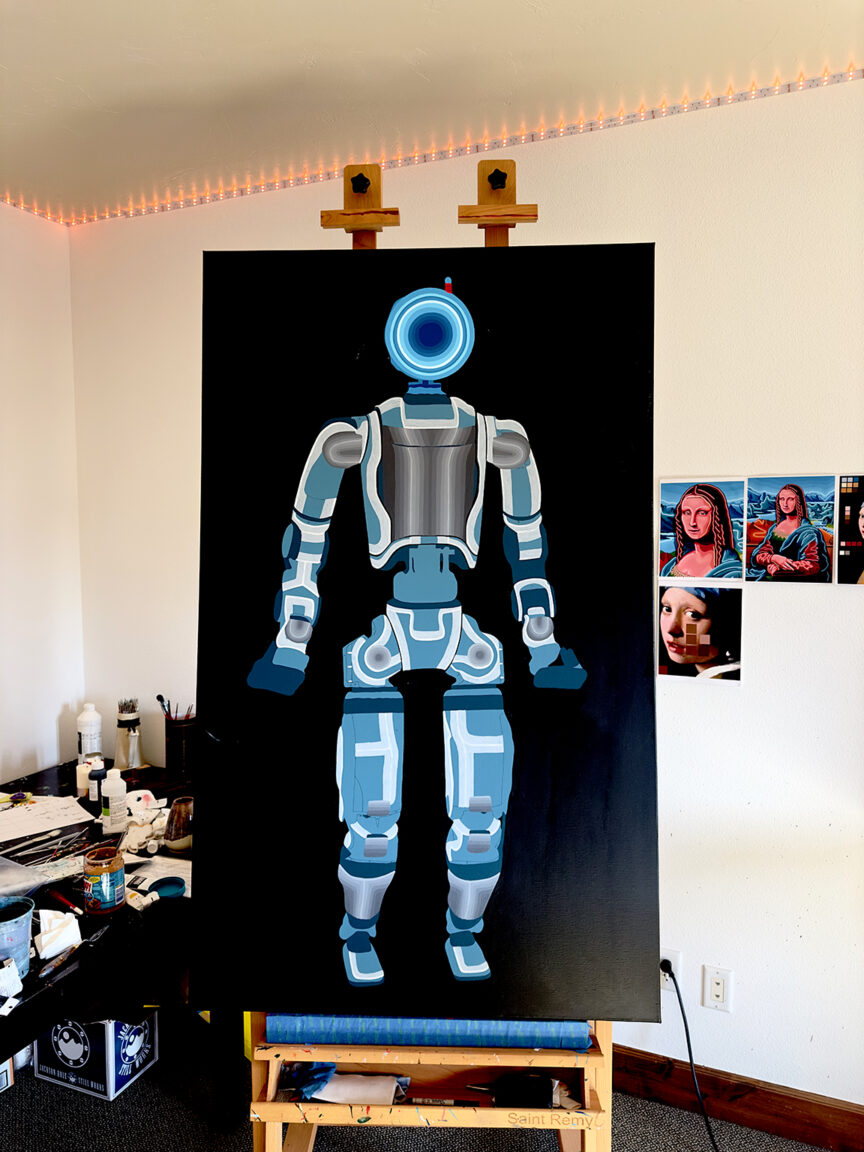
Layering cool blues, metallic greys and subtle shifts in value were critical in identifying the form.
The red eventually disappeared beneath the machinery. Each segment received its own family of marks and tonal gradations. The body began to feel dimensional, while the black field isolated Atlas from any recognizable environment.
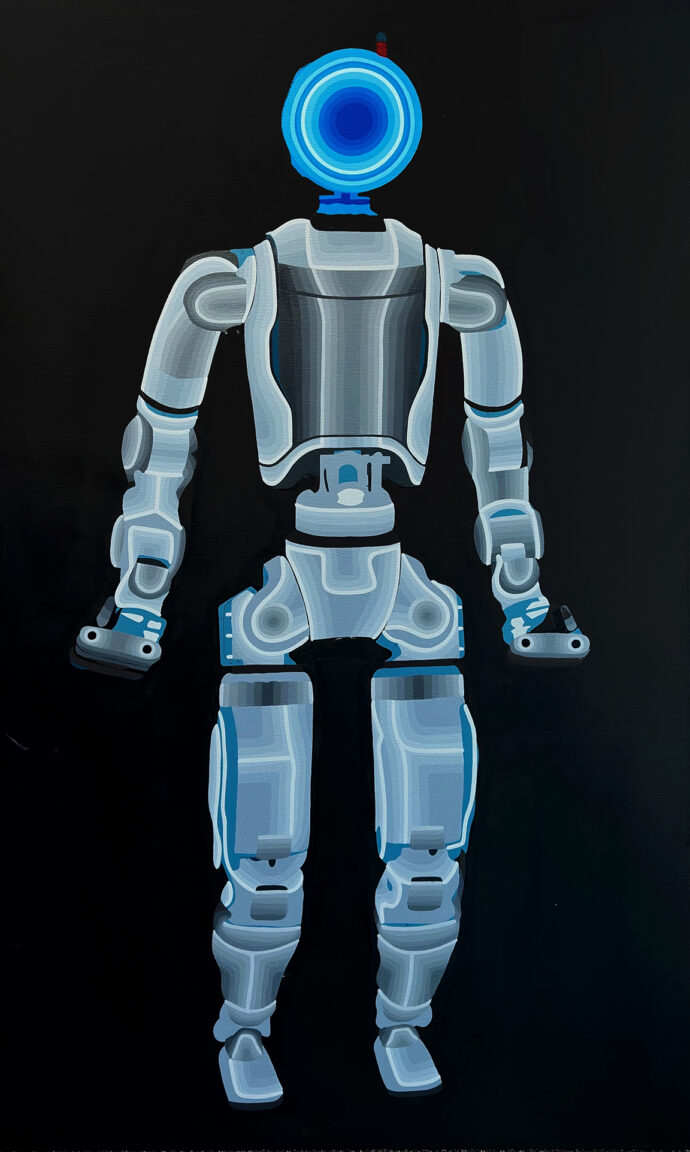
Here… the clean, graphic version of Atlas was nearly complete…. and, honestly? This could have been the finished painting.
Atlas was legible, refined and faithful to the machine. It was also exactly what I expected to make — and that became the problem.
The Human Intervention
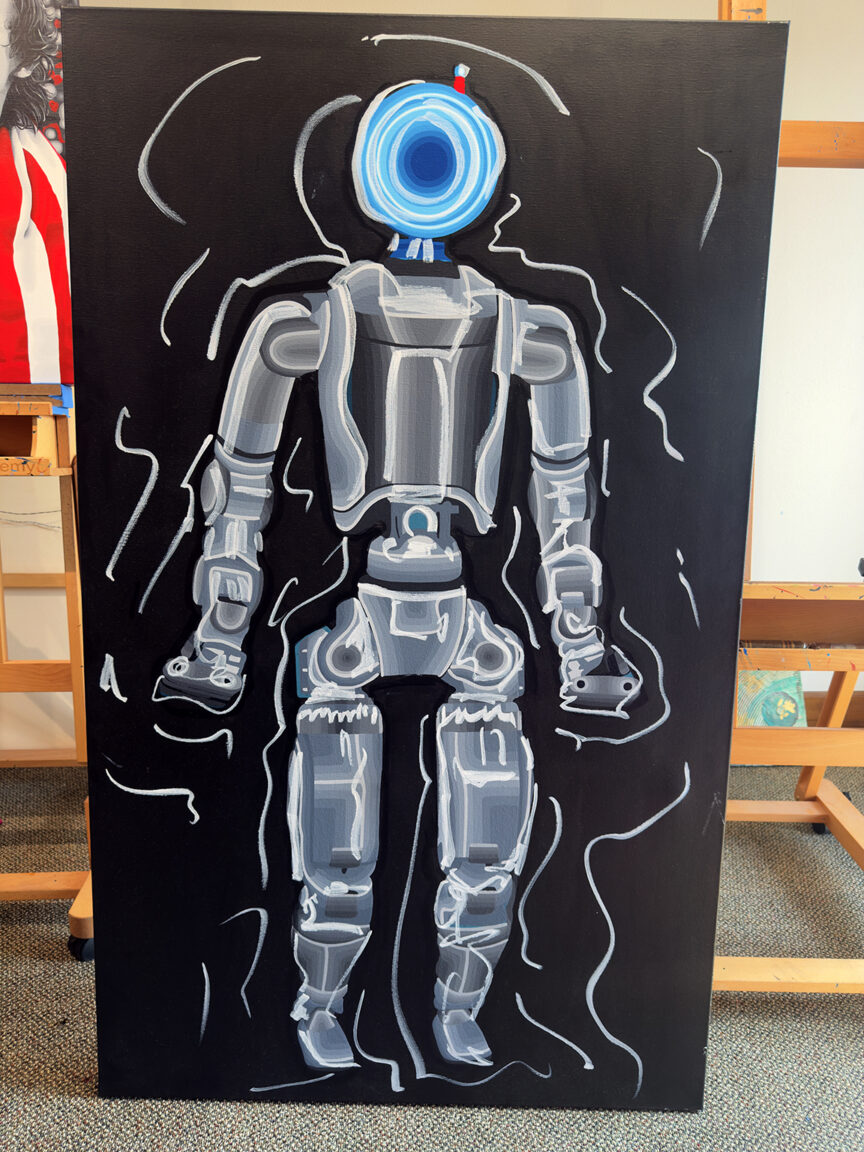
The turning point: a fully articulated robot standing alone in a field of black, begging for human intervention.
As artificial intelligence and robotics advance, our conversations increasingly revolve around what technology can reproduce. Images can be generated in seconds. Styles can be simulated. Technical perfection is becoming inexpensive and abundant.
What remains distinctly human?
Perhaps it is the impulse to disrupt something after spending countless hours carefully constructing it…. A willingness to exchange polish for feeling. To make a decision that is irrational, irreversible and entirely human.
The first expressive marks broke the silence of the black background. From there, I began working into the painting with white… loosening the edges, repeating forms and surrounding Atlas with gestural movement. The controlled robot was suddenly placed inside a distinctly uncontrolled environment.
From there, I leaned fully into abstract expressionism, echoing my heroes from a bygone era. The brushes became larger, I used my fingers to apply paint. The marks became faster. Blue, white, grey and black moved across the surface in loops, arcs and interruptions. Some passages clarified the figure… others obscured work I had spent months completing.
That destruction was essential in the final painting… the result is no longer simply a portrait of a robot — it is a collision between two different systems of creation.
Atlas represents precision, repetition, engineering and the accelerating possibilities of technology. The surrounding gestures represent intuition, emotion, physicality and risk. Every sweep records the pressure of the brush, the speed of my arm and a decision made in real time.
I did not want to paint an argument against technology, rather, I wanted to paint the divergence… to explore the space between what a machine can execute and what a person feels compelled to create. Boston Dynamics is teaching machines to move more like us. In painting Atlas, I found myself searching for the marks native to the artistry that has inspired me for decades.
Atlas
36″ × 60″
Acrylic and Oil Stick on Belgian Linen