
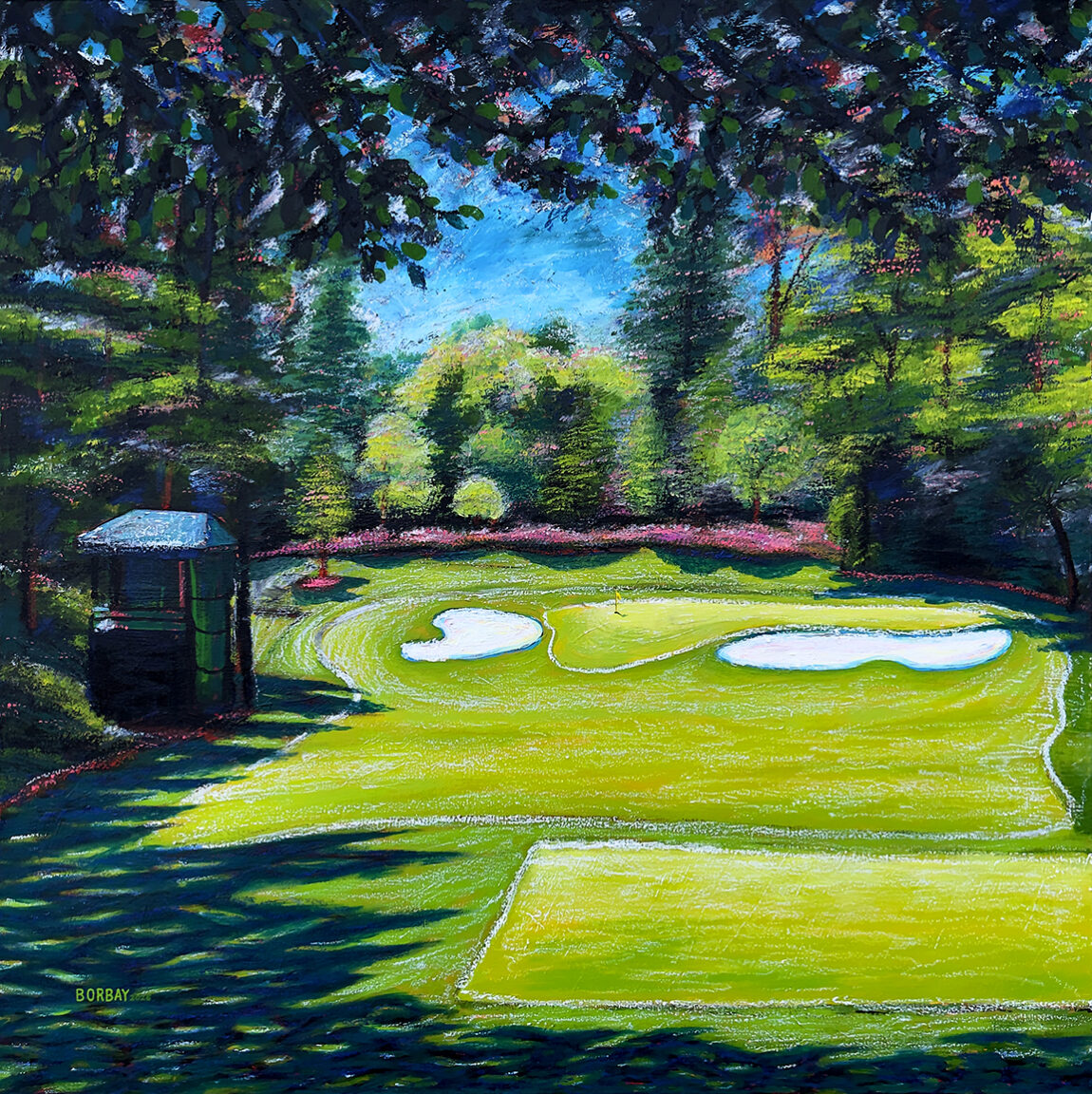
Masters week has become a quiet ritual in the studio.
What began in 2020 with Golden Bell has evolved into a long-view study of Augusta National… one hole at a time. Eighteen years, eighteen greens. Each approached not as an image, but as a problem of space, light, and consequence.
For 2026: the fourth hole—“Flowering Crab Apple.”
A par three that reveals itself slowly. From the tee, it feels open. Generous, even. But the closer one looks, the more it narrows. The green sits in tension, held in place by contour, contrast, and restraint.
The aim was to build that tension—to create an amphitheater where the green holds the eye, and everything else recedes into pressure.
Phase 1 — Bifurcation
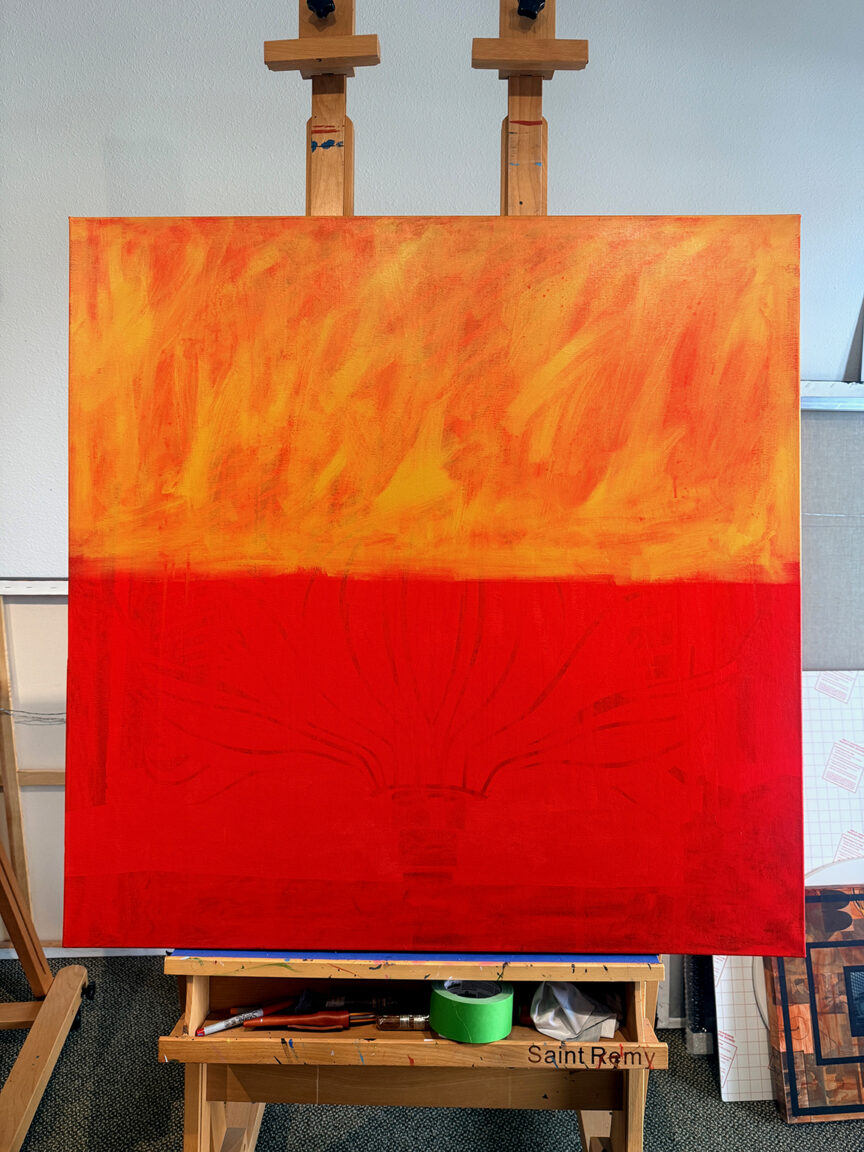
Every painting begins the same way: without consequence.
A red underpainting establishes heat beneath the surface, followed by a quick division of the canvas. The move is instinctive — more range session than round. Loose, exploratory. A place to cycle through decisions without committing to any of them.
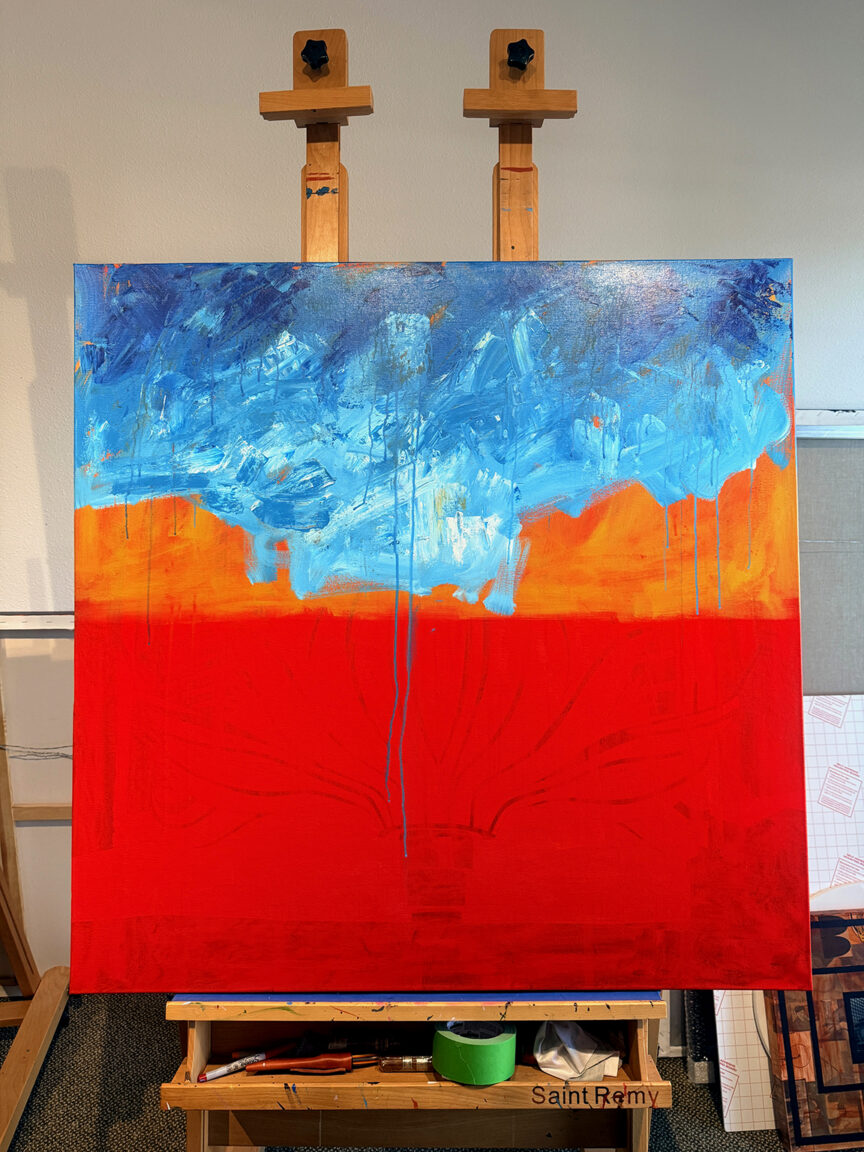
There is no refinement here. Only direction.
Phase 2 — Establishing Form
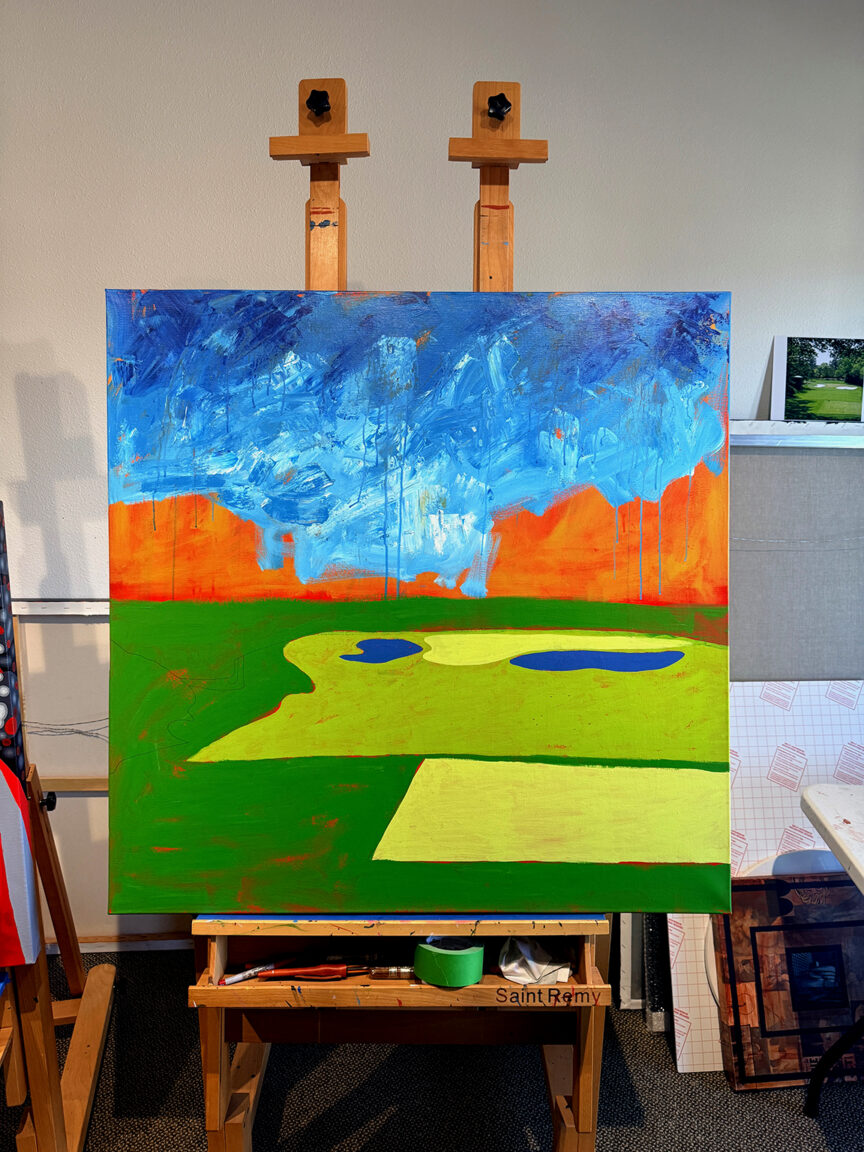
The essential structures arrive early.
Green. Bunkers. Tee. The line of play.
For the first time in the series, the composition runs tee to green — one continuous decision. The viewer is no longer placed near the surface, but drawn into it. What appears expansive begins, subtly, to compress.
The sky is laid in with force — blues pushed across the surface, sand introduced, allowing gravity to participate. The drips are not incidental. They establish movement before detail, atmosphere before control.
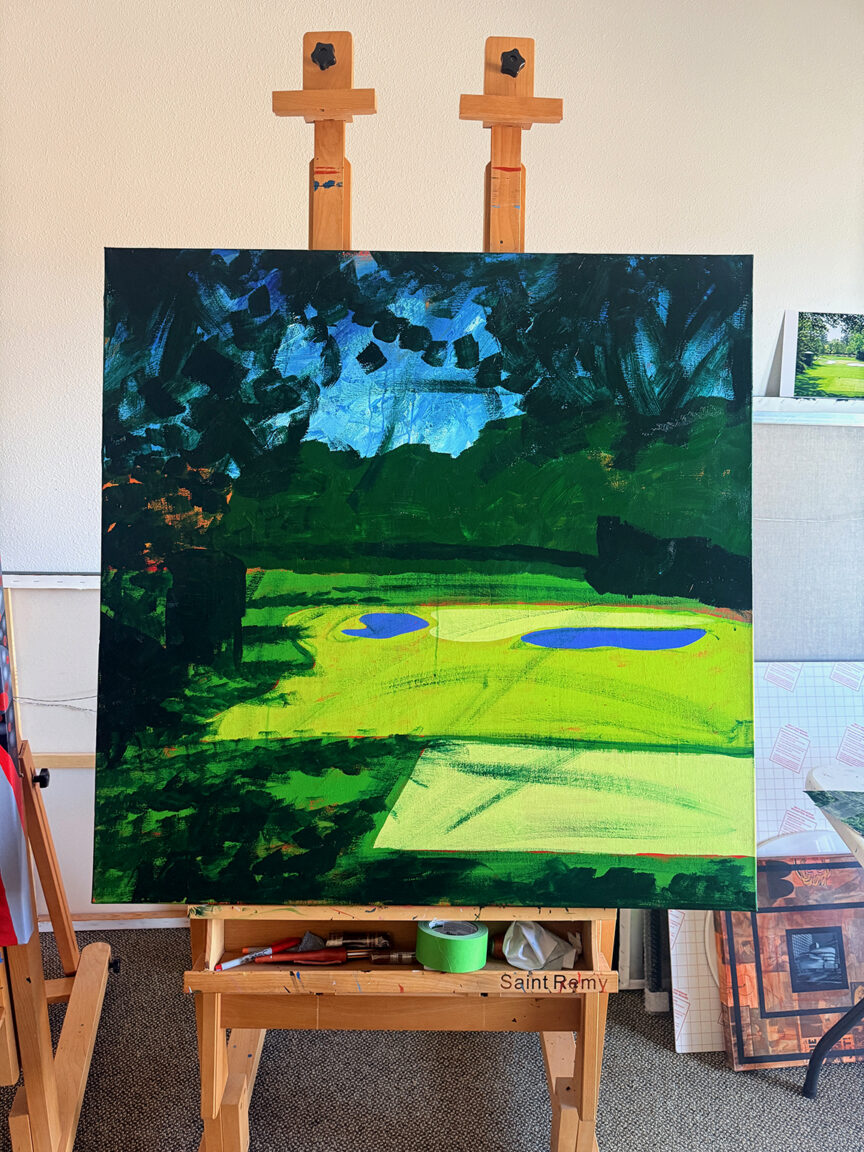
Darks arrive first — deep greens mixed by hand, placed quickly to establish shadow and weight. Nothing is precious at this stage. Commitment matters more than accuracy.
Phase 3 — Controlled Chaos
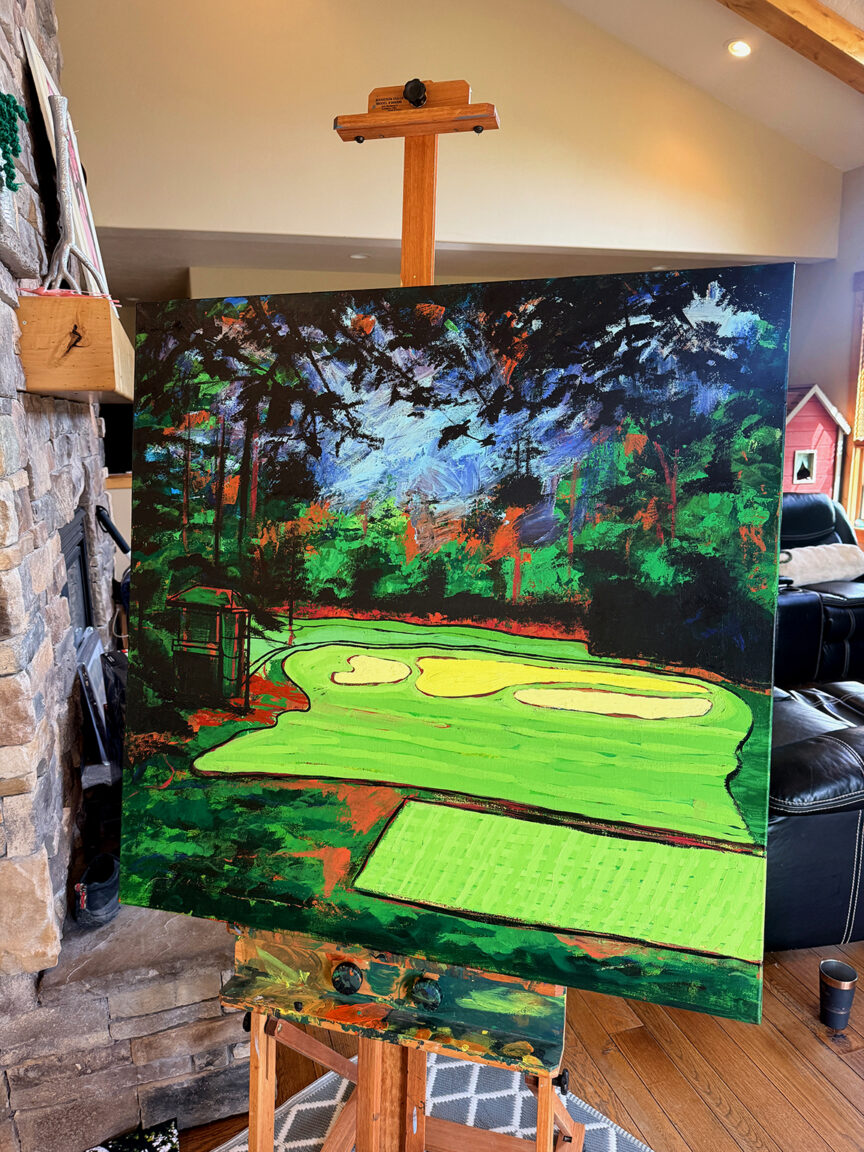
Forms are suggested, not resolved. Edges remain soft. The composition is allowed to breathe, to shift.
This is where most of the risk lives.
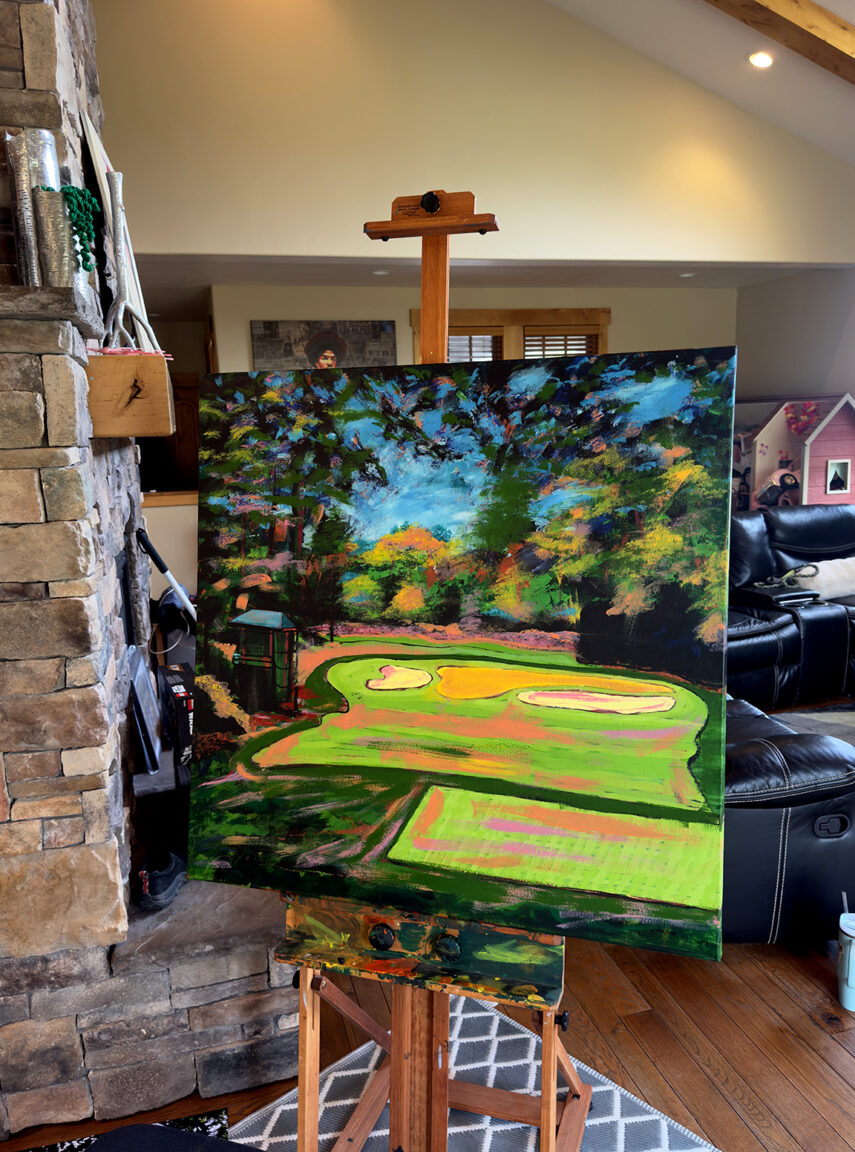
Augusta reveals itself with subtlety.
Its color is not loud, but exact — pastels applied with intention, never excess. That palette begins to enter here, layered over the established forms with increasing precision.
Phase 4 — Color and Compression
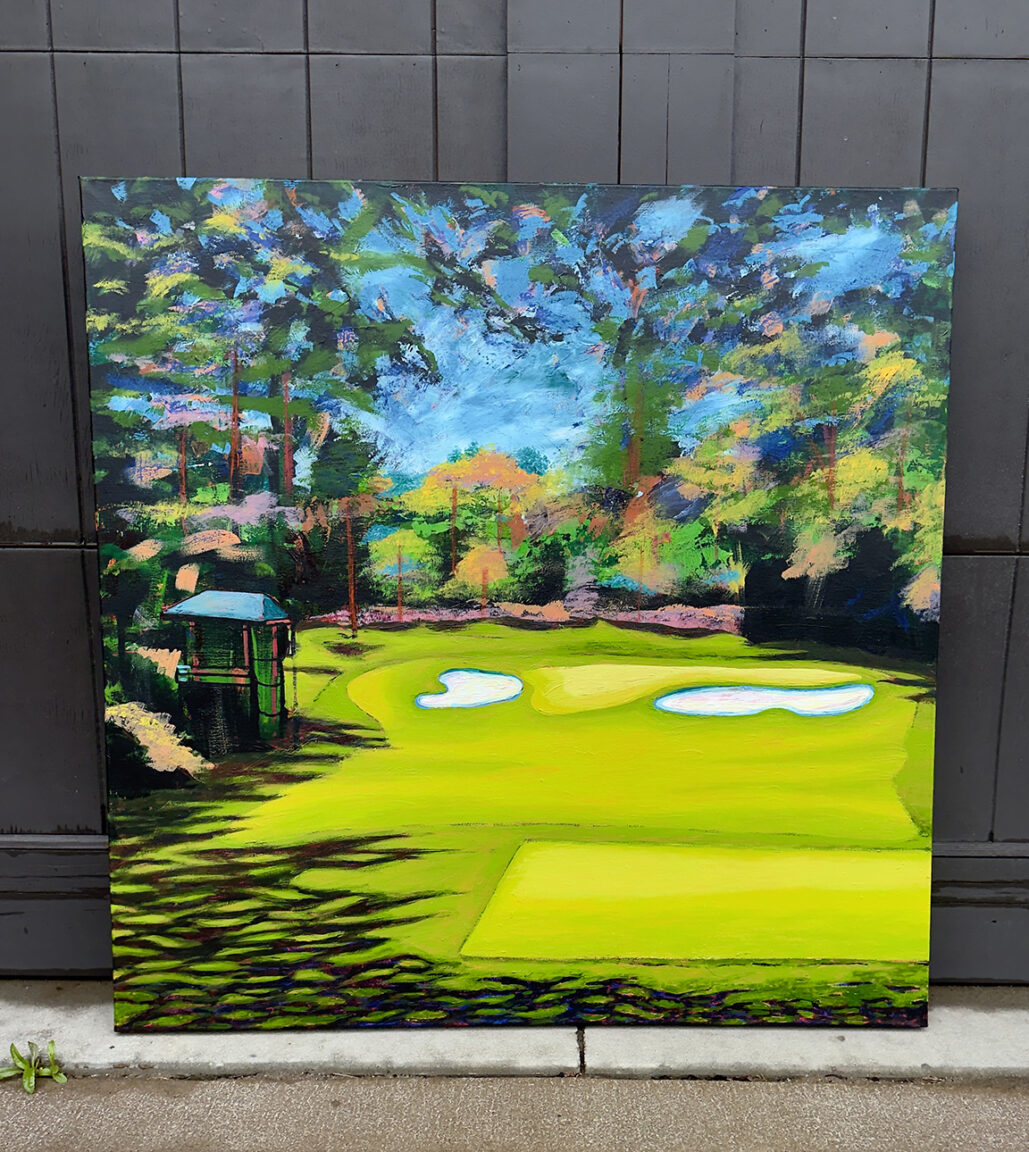
Standing on the tee, the eye narrows. The green comes forward. The surroundings begin to fall away.
The painting follows that same visual journey.
The fairway is refined. Shadows deepen in the foreground and mid-ground. The composition tightens around a single idea: the approach.
New materials enter — oil stick, flashe — introducing variation in texture and mark. Each layer is additive, but also selective. Not everything is carried forward.
Phase 5 — The Impression of Impressionism
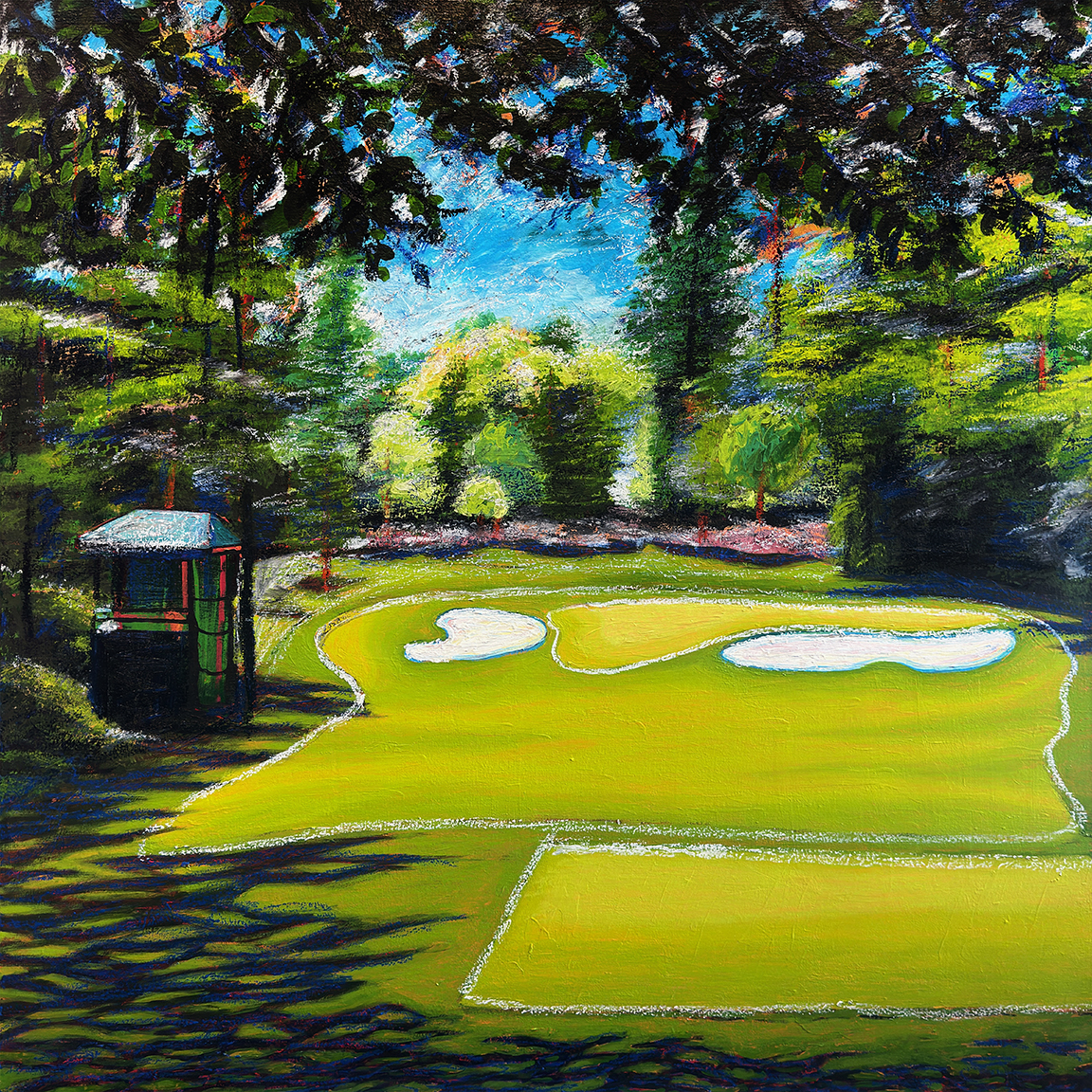
At this stage, the painting begins to assert itself.
Color becomes more active, applied in strokes that respond to what is already there, rather than what was planned. The surface carries energy now. Movement across the picture plane replaces structure as the dominant force.
Augusta’s beauty lives in these moments—where control and freedom meet.
The challenge is knowing when to stop.
Phase 5 — Chasing the Green Jacket
The final decisions arrive late.
Oil sticks deepen the surface, introducing new tones and lines that push and pull against the established forms. The painting resists in places — forcing adjustments, reconsideration, restraint.
The greatest moment of risk comes near the end. A single white line in the foreground… defining space, anchoring the viewer, carrying the weight of the entire composition. Like a putt that must fall. Commit, or live with it.
From there, the painting resolves itself. Not all at once, but through a series of smaller decisions, each one narrowing the outcome.
The final placement comes last.
The Sunday flag.
Placed, not added.
Conclusion
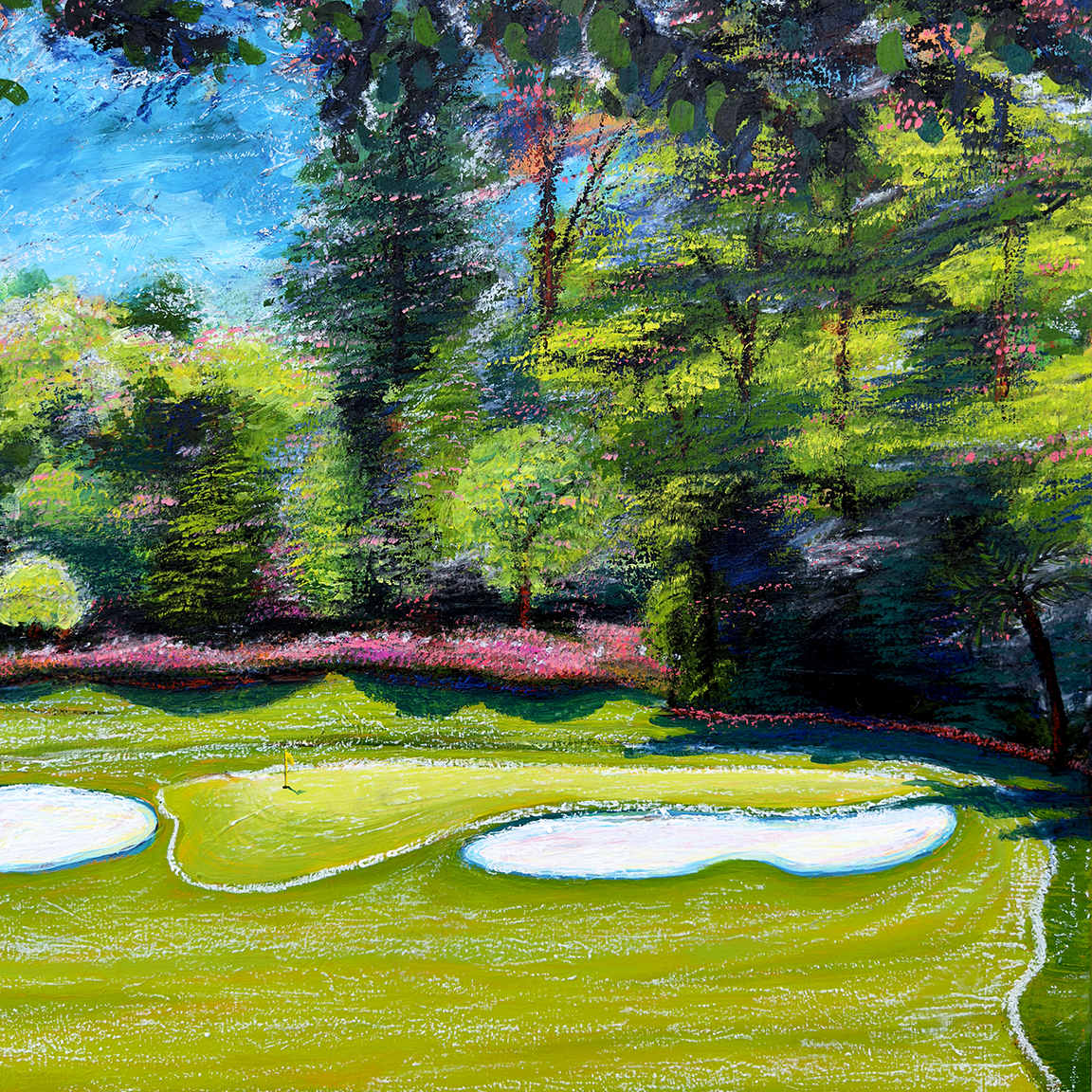
Like any Masters Sunday, control is never guaranteed.
The work pushes back. Adjustments are made. Edges sharpen, then soften. Color advances, then recedes. What remains is not what was planned, but what was earned.
The painting was completed, as always, just as the final putt dropped on the 18th hole at Augusta National.
Hole 4 — Flowering Crab Apple, Augusta National
Acrylic, Oil and Flashe on Belgian Linen
40″X40″
2026
Explore the Series
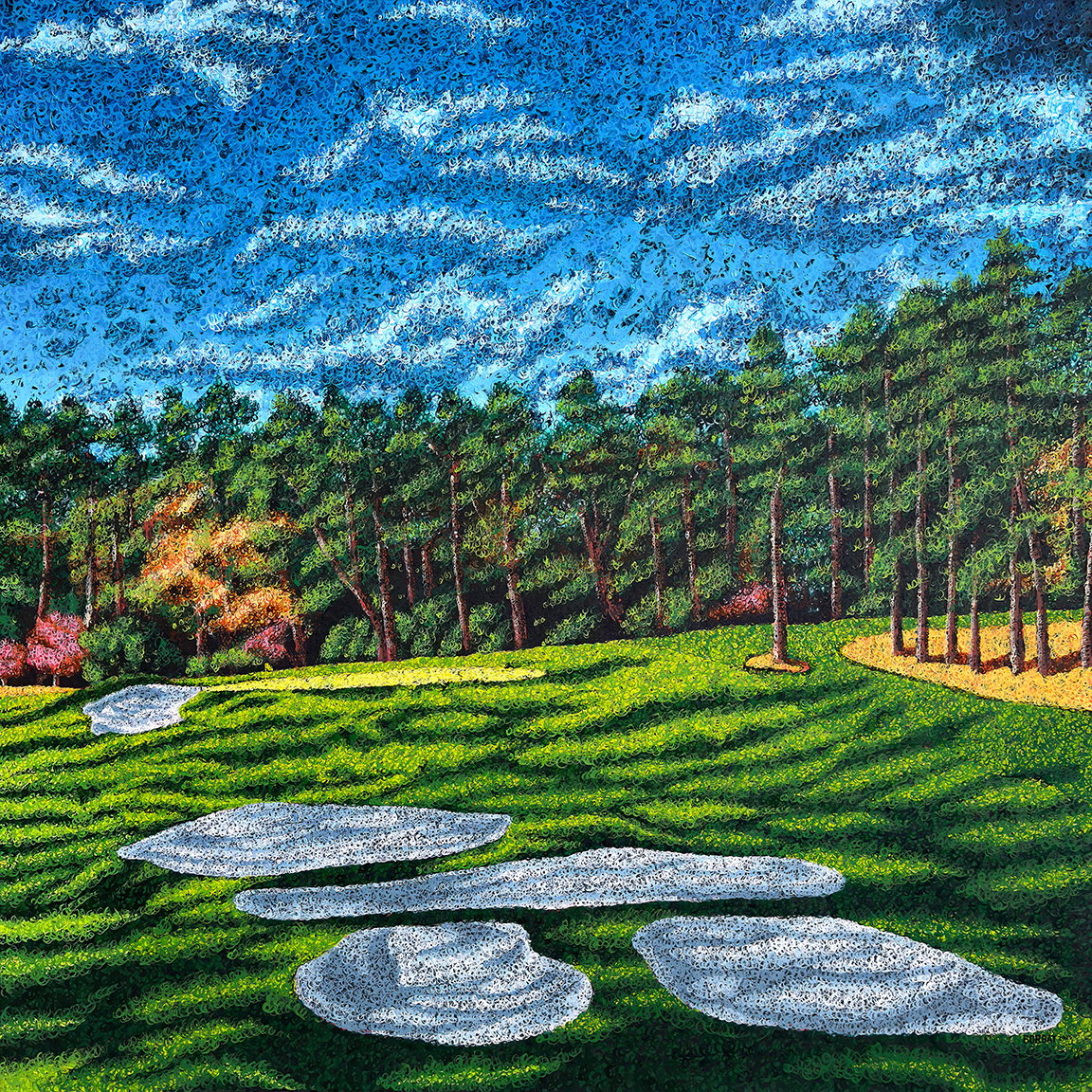
Hole 3 — Flowering Peach, Augusta National
40″X40″
Acrylic on Belgian Linen
2025
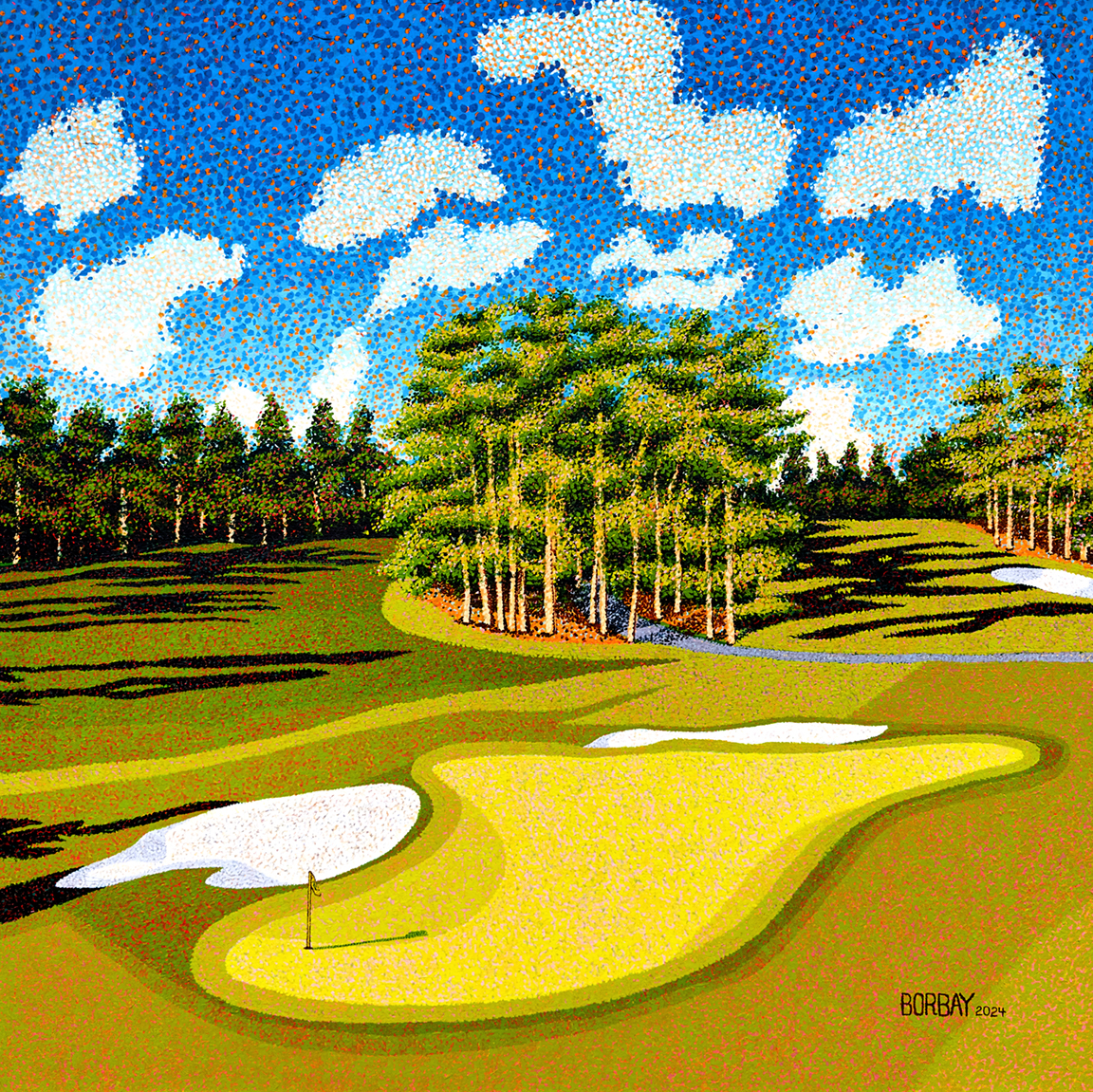
Hole 2 — Pink Dogwood, Augusta National
40″X40″
Acrylic on Belgian Linen
2024
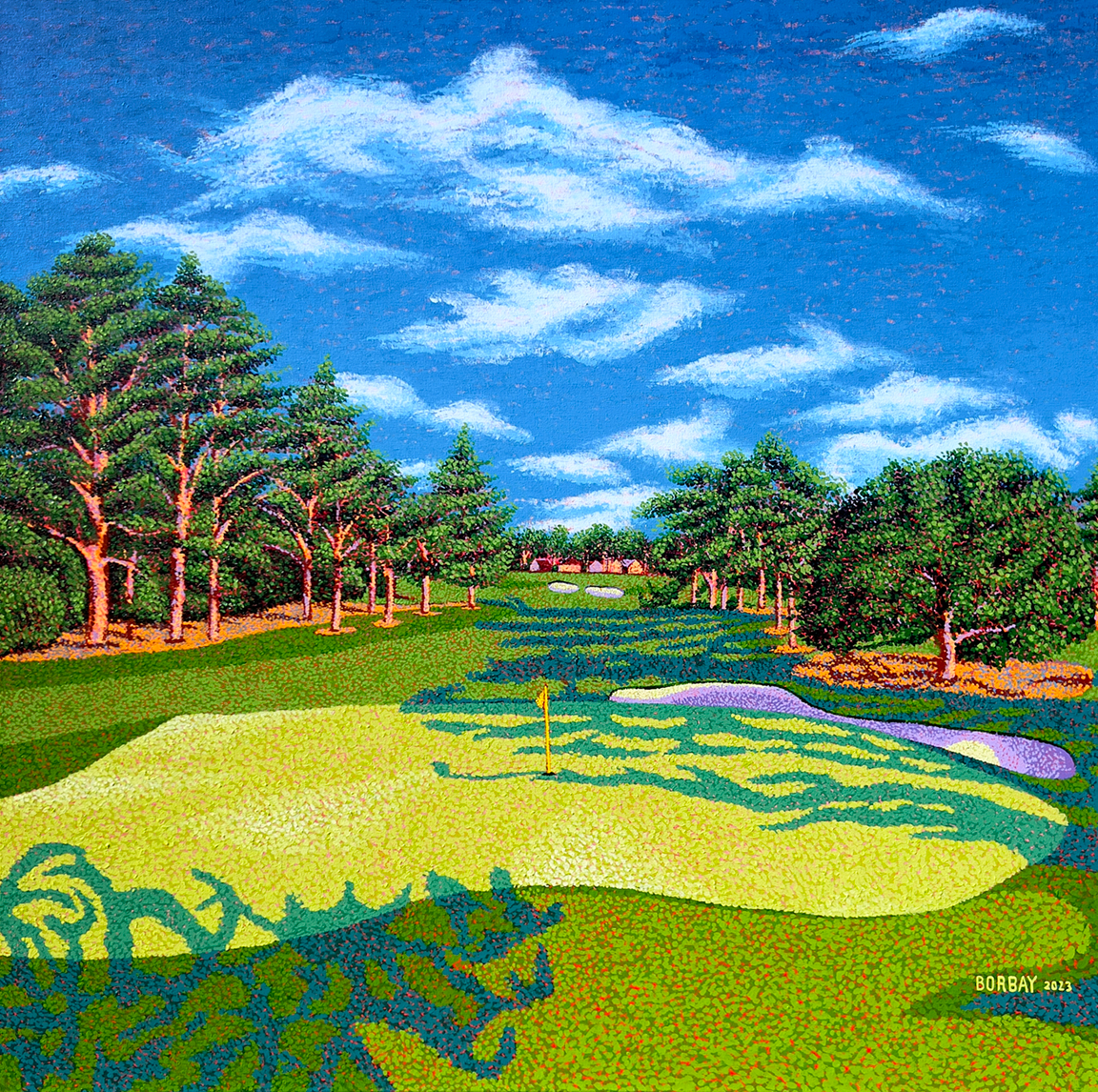
Hole 1 — Tea Olive, Augusta National
40″X40″
Acrylic on Belgian Linen
2023
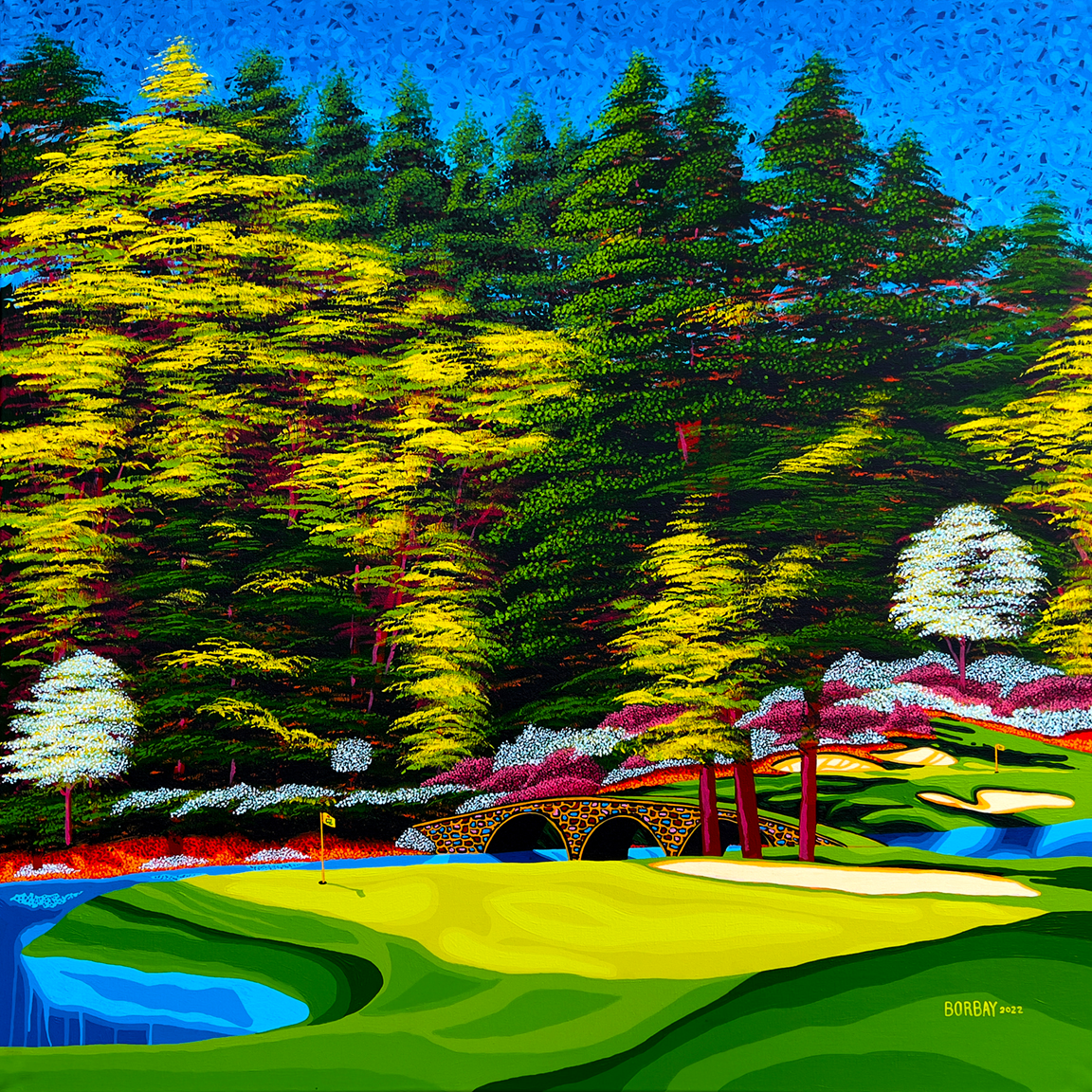
Hole 11 — White Dogwood, Augusta National
40″X40″
Acrylic on Belgian Linen
2022, Placed
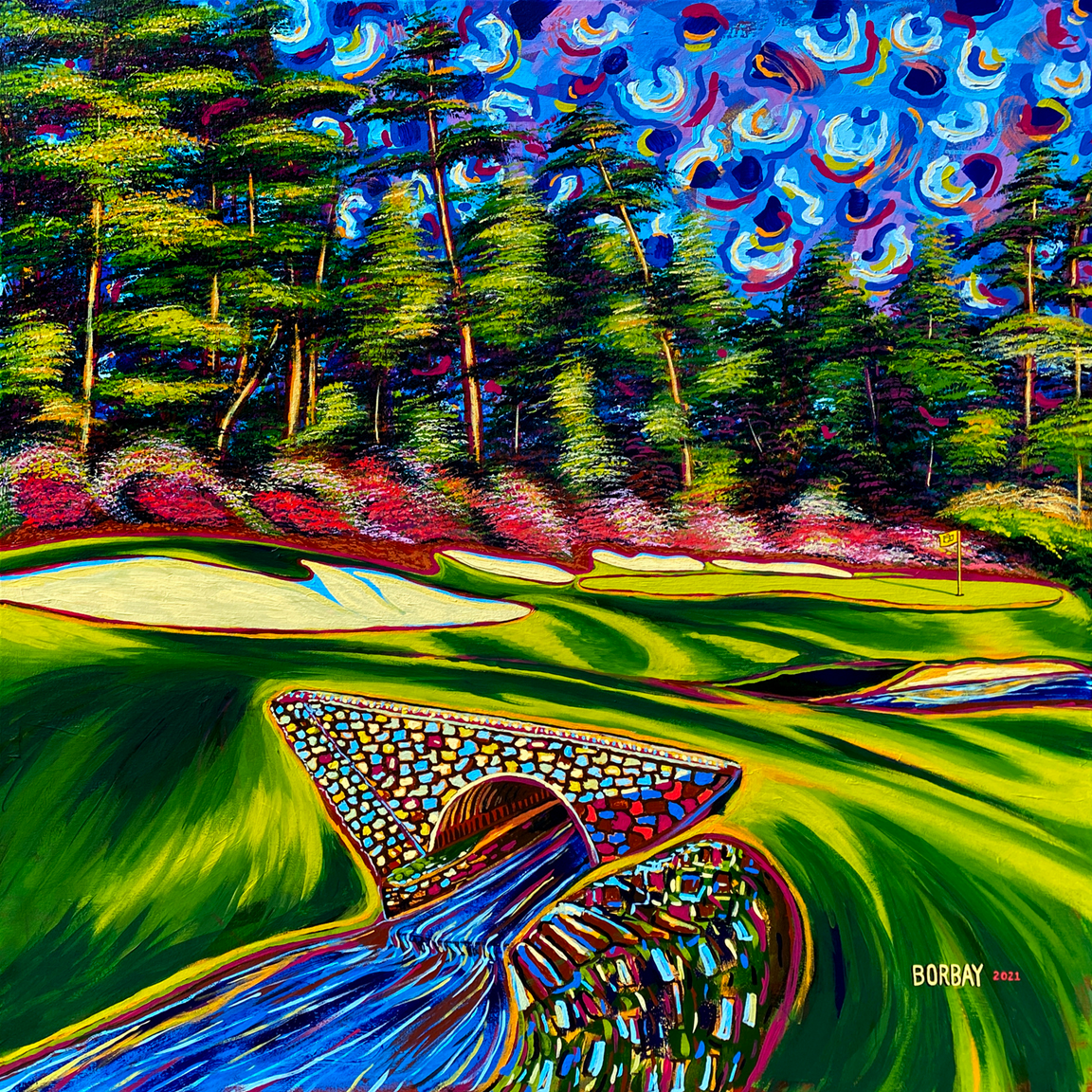
Hole 13 — Azalea, Augusta National
40″X40″
Acrylic on Belgian Linen
2021, Placed
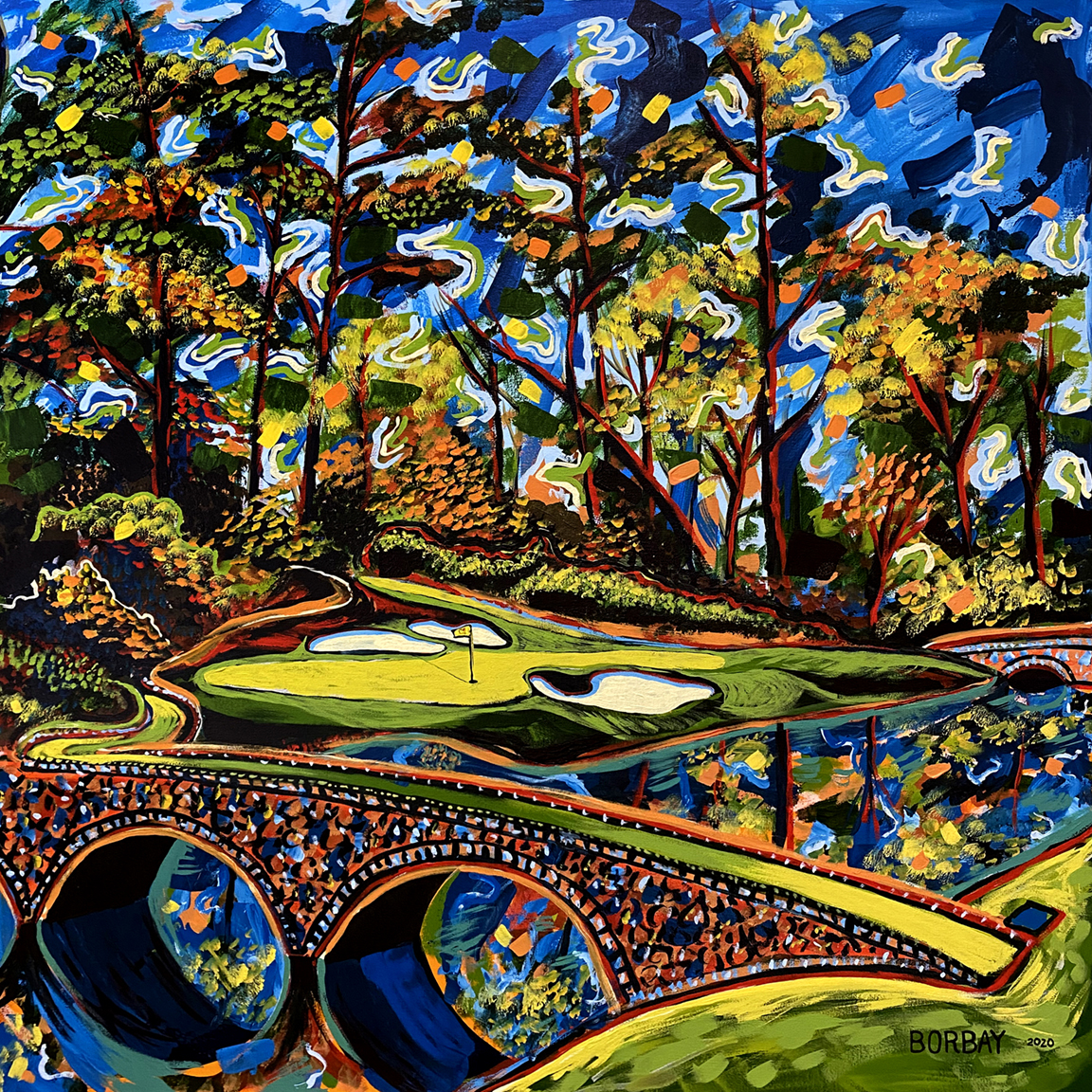
Hole 12 — Golden Bell, Augusta National
40″X40″
Acrylic on Belgian Linen
2020, Placed